I Always Wanted To Be The Mayor Of Orillia
By John Swartz
As with every election, SUNonline/Orillia profiles candidates for office. In the case of holding the mayor’s office in Orillia, this leadership position is different than those of council. Despite having an equal vote most of the time, being the leader of council and therefore the community along with some responsibilities beyond those of other council members, raises the significance to a level a profiles are warranted.
Each candidate was contacted by email with an outline of the discussion so voters could compare answers. They participated a sit down discussion of the same issues generally being talked about and issues we feel should be talked about.
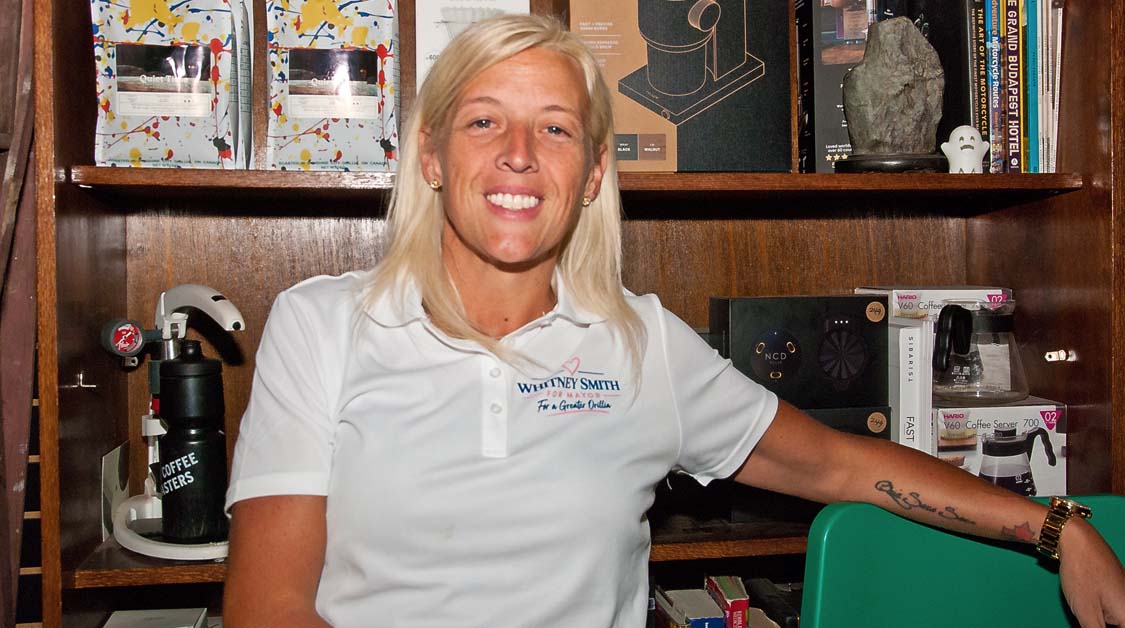
Whitney Smith was born in Orillia and lived here most of her life.
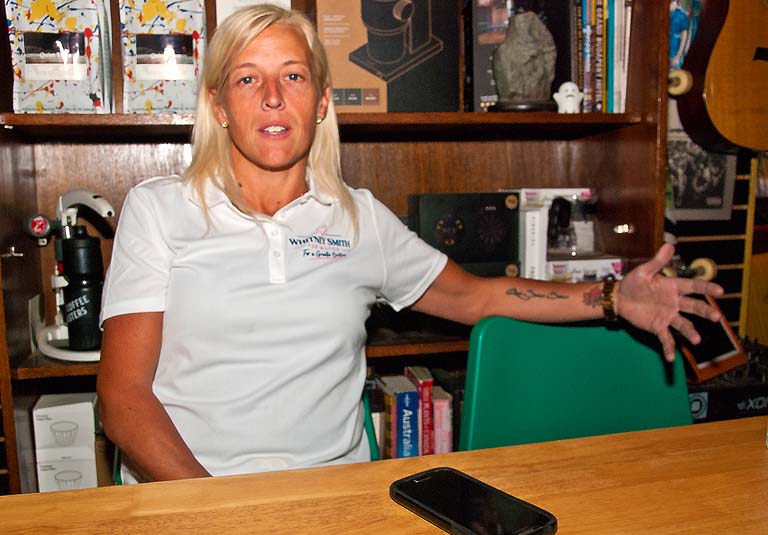
“We grew up on Maple Drive. We kind of moved around. My dad was a land developer, so always building and buying. We bounced around a bit, then we were on Bass Lake for a bit, then Kempenfelt Bay in Barrie. We had a place in the Keys, Marathon, Key West, so we did a lot of Christian school/home school kind of curriculum.” she said.
One thing has stuck with her since childhood and she is now acting on it.
“When I was a kid I’d say I wanted to be the mayor of Orillia and not many little girls say that. That was something I’ve always had such a strong heart and love for Orillia. Any the end of the day I was able to serve on council. The time made sense, I was at point in my businesses I could step away a little bit.”
She is a one term councillor.
“I’ve really enjoyed being able to give back to the community, to be a voice for our residents and that really matters to me. I want to see a city people love and can thrive in for multiple generations to come.”
She went to Northwest Florida State College and earned a business degree and has since been involved with several business she started.
“I think the benefit of being an entrepreneur is when you get to a point of success you have the ability, time and resources to be able to give back in a greater way. I’ve built three businesses, they are successful, life is good.”
A question asked of every candidate regardless of which level of office they seek is, – how do you learn? We all have a moment when we know nothing or little of something others expect us to know, so we must find the answers somewhere. The trick is looking in the right places, hence the question.
“I’m an investigator, so investigators look for evidence and look for facts. That’s how we produce the end result. It depends on what it is, if you need to connect with City staff on something; if somebody is asking about underground infrastructure, obviously I’m not an engineer underground anything, so it’s matter of talking to the right department; take me out there, show me so I can understand.”
“At every point it’s connecting with all the right people, connecting online seeing if there is something you can understand quickly what the greater picture is. Especially in the municipal world, we make policy, but the residents have a lived experience every day with the issue they are seeing; so it’s really understanding both sides, understanding the staff angle, but also knowing the resident’s side and being able to bridge that gap.”
Champlain
All candidates in this municipal election were asked for their positions regarding the monument. The context of the question was, so many make emotional arguments for returning it to its place and for not doing so. There are historical reasons, which SUNonline/Orillia has written about, which paint a very different picture of Champlain than conventional wisdom views. We wanted to know if those running for office had anything beyond the emotional argument for their position.
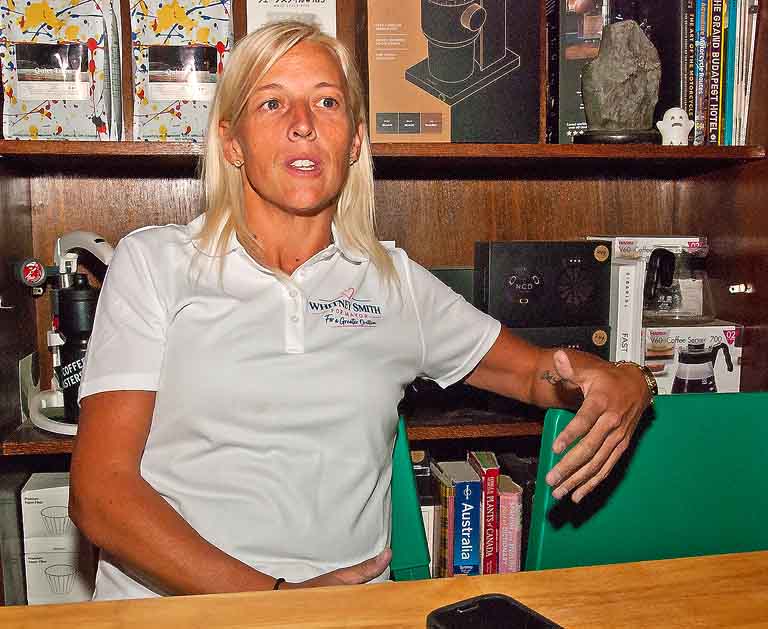
“It’s not up to me, it’s up to our residents. Ultimately we’re the voice of our residents. It really depends. I heard very much, my ward at least, bring Champlain back, some said bring it back in the old fashion, some said bring it back in the redesign, ultimately it was loud and clear from Ward One residents they wanted it back. Ultimately that is our responsibility to be the voice of our constituents, should that conversation come up again, we will listen again, we’re going to understand what the community wants. No matter what, I think we’re going to have a redesign and it’s going to be different than it was; the education pieces are going to be there. We’ll work through all the reconciliation we need to. We’ll make sure it’s done in a way that’s appropriate.”
“If he is to return, I am supportive of his return because that’s what my constituents asked of me. A lot of people have a very personal opinion of it and if they were against it they didn’t vote for it, but that’s not our role. Our role is to be a voice for our taxpayers and the residents of our city and I take that very seriously.”
But what if those constituents are wrong on this issue, or any issue resting on emotional argument instead of data? Does one still do what those people say, even if it is contrary to what the record says?
“That’s up to them. There is a few different redesign options tossed around to us, so ultimately the public saw maybe one or two of those, ultimately people were OK with the potential redesign. There’s always the educational core, so it’s not to say just because some people have one side of the facts that we don’t, everybody can have both. There’s a point maybe we bring in a historian and we chat with that person so we understand, as a whole city, better. I’ve heard the arguments saying the same thing, ‘I jumped on it when I was a kid,’ I’ve heard all that too, and we all took pictures with Champlain when we were young, but of course when we were young we didn’t understand the historical value in any way.”
Then there is the knowledge, if one has been inclined to look things up, the chiefs of the various area bands were informed by the Indian agent of the government’s plan to take their children and send them to residential school on the land we now call Terry Fox Circle. To many it is an insult to place a figure representing the vanguard of colonialism on the same dirt where so many learned a fate that scarred so many. If the monument is to return, maybe that spot is not the best place for it.
“He would have been separated in the different renditions, I think he was around maybe 25 feet away. He wasn’t going to be right there.”
Homelessness
Before the nomination period closed the talk of the town was the monument. However another topic has since become the central point of discussion. It has become of such importance the topic of homelessness was almost the central theme of the candidate’s night at St. Paul’s Centre a couple weeks ago and Champlain only came up once near the end of the night.
Homelessness didn’t just happened, it took years of planning, or rather the by-product of homelessness took years of economic planning to hand over control of our lives to corporations and indifference of the consequences at both provincial and federal levels of government. We are reaping what was sowed so long ago and now the finger pointing is rampant – and it is most often pointed at the homeless as if they caused their circumstances and therefore if they simply got jobs all their troubles would be solved.
Only this year did the feds get back in the game of funding housing, and the province is content with housing start targets with some minor compensation to municipalities for taking away some of their planning and zoning controls. Both higher levels of government pushed the responsibility for housing down the chain. The problem is with the causes being at higher levels and municipalities being what they are, the entity least able to even tackle, or solve as some believe, homelessness is the organization with the least resources to do so.
So, how does a mayor, or council do anything substantial and lasting, or is the best approach to force higher levels of government to act by constant pressure to change policy? And how does one do that?
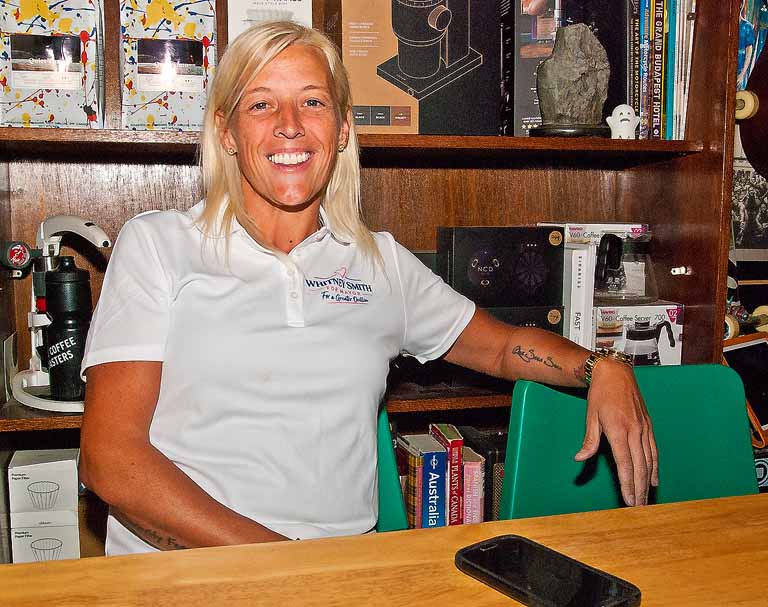
“The good thing is Orillia has a good relationship with our federal and provincial partners. Ultimately it’s up to us to make the right connections. I also think we need better enforcement; drugs are rampant in Orillia and all the municipalities across Canada and there needs to be law enforcement where drug dealers aren’t simply caught and released. It’s a big issue; we’re seeing fentanyl, methamphetamines, cocaine, heroin, serious drugs, we need to stop the drug dealers in their tracks so we do not have this running through our streets. There needs to be better enforcement on drugs; stop the drugs and you stop some of the problem, or you slow that down.”
“Obviously mental health is a big one and something we need more help with. I read something years ago and it said the average personality is dealing with the same amount of anxiety and somebody as a 1970s mental institution patient. So people are dealing with anxiety and stress and depression in numbers we’ve never seen before.”
“On the affordability side, if we look at a way to potentially reduce development charges, maybe down to nothing, that encourages builders. I talked to a builder who wants to build an apartment building; he’s going to pay around $450,000 in development charges. If he didn’t have to pay $450,000 on development charges, that $2,000 a month apartment could be $1,450 because he saves 400 and change. There’s ways we need to look at it. If we extend our employment lands we grow our tax base so we have more funds and it’s not putting that burden onto our current taxpayers.”
“The province is going to open up some sort of grant (they did this week), so we subsidize X amount (of DC charges) and the province can kick back X amount to us. There’s always a way to work with that.”
But that doesn’t mean the expansion of municipal services to accommodate growth isn’t paid for. The payee just shifts from developers to property tax payers, which is just another form of privatizing profits and socializing costs.
“The province and federal government want to grow, Somebody’s paying for that. Someone is going to be wearing that cost, but the more tax base we can build, it will eventually balance itself out; you’re building thousands of more homes, you’re building potentially hundreds, if not thousands more commercial, retail, some sort of business. It’s not going to happen overnight. There’s no quick and easy solution, but we know we need more houses, we’re supposed to grow to 51,000 by 2051; that’s going to happen in the snap of a finger. We know we need to figure out now how do we get more development and we’re hearing affordability. It’s worse for people now, they can’t afford groceries, our food bank is up 2500%. It’s crazy, it’s all around. We have to try find the solutions in every part we can. If we make some little changes in a few different areas it will eventually become the bigger impact.”
Drug abuse is the cousin of homelessness, not the cause. Drugs are an escape from reality and when your reality looks like you won’t have a roof and the often long period of time facing the prospect leads people to want to forget their impending doom. That is not to say drug abuse is not a problem, but the solution is more complicated than and one great avenue of approach is to eliminate the circumstances that lead people to drugs.
“I’ve talked to the Lighthouse, I’ve also talked to some of the different shelter services and you have some individuals that are in an emergency shelter that have drug issues that introduce that problem to people that never had it before. You’re putting a lot if individuals in one place.”
“I’ve gone for the last couple years to the association of municipality’s conference in Ottawa, there’s multiple sessions and the ones on homelessness, nobody has a good solution. I think from what I’ve seen is everyone is trying the same thing and expecting a different result. I think we need to look at what works and look at what doesn’t and if it doesn’t work we need to end those programs because why are we going to keep doing the same thing over and over again because it’s not effective. We’re something uniquely Orillia. One of the issues is so and so did this, let’s do it too. Halifax has a program that’s working well, let’s do it too. That’s’ great, we’re not Halifax, we’re not the size of Halifax, we need to do what works for us. We need to work with our people in the county, at Lighthouse, at the different shelters, what works for Orillia? How do we just change what we are doing slightly, and that should introduce some better results.”
Some places have done things that work, Scandinavian countries for example and Finland in particular. Does some of the inspiration for action come from off-shore?
“I think it boils down to thinking outside of the box. We have this property on Benner Street for decade and it was too small. We tried to give it away to multiple organizations. No, no, no, it’s too small. Maybe it was too small for what they were thinking of, but it’s the perfect property for something. I put a motion in last month for this property. It could be 4 units, 6, 8, I don’t know, we’re going to figure that out. I want that to be a pilot project and we have a lot of City owned lands that aren’t that big, but we could potentially duplicate those around the City. We don’t have the money to build skyscrapers, but we can start with smaller projects and get people housed and they just provide more security for them. I’ve had some say, ‘they are too small,’ some people only want something that small; especially as people are aging they don’t want a lot to clean up they need something that’s accessible for them. These might be the perfect place for some people and then that opens up housing for somebody else who maybe wants something different. It’s just thinking differently to accomplish the best result for Orillia and protecting the taxpayer and making sure everybody has a roof over their head.”
Strong Mayor Powers
This is an issue entirely made up to solve a problem many see didn’t exist. Many people believe a mayor doesn’t not need more power. Some strong mayor powers can be returned to council, as a mayor is that something you would do?
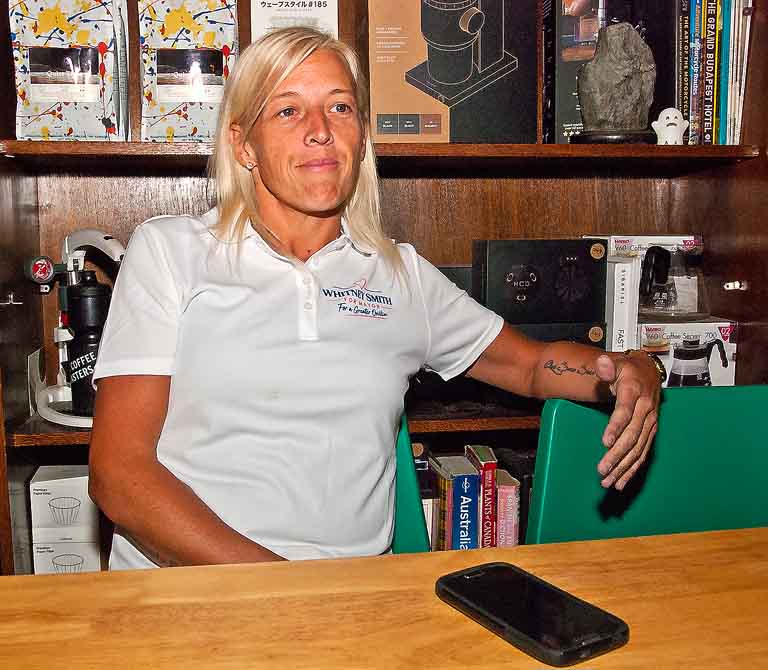
“There is no rejecting them it’s provincially legislated, they are there. I have no intention of using them. I don’t want to be a strong mayor, I want a strong council. I want everybody working together, ultimately for the betterment of Orillia and our taxpayers. We are elected to represent our own wards and ultimately the mayor representing the City. I want all of my councillors to come to me with whatever is going on and we make decisions that make sense for the City as a whole working together. That’s my ideal solution. Twenty years in business, I work with my teams, I am not their dictator. I want to work with my council and I want to have a strong council.”
A municipality can reject parts of the provincial act, for example the budget can be council’s or the mayor’s. Right now council only has the ability to accept what a mayor puts in front of them, and if they don’t a mayor can veto. It only takes a motion, which a mayor would have to support to turn back the clock and set budgets the way it was done before the power was granted to mayors.
“Technically it’s still the council’s budget, it’s just called Mayor’s Budget. It’s tackled the same way, staff come to us with what they have, we still come to them and say put this in, add this, put this in for consideration.”
“I want to work with our council. I’m not trying to have some strong arm against anybody. I want to work out council and our staff as we have been.
“I don’t have any need to use them. They (the powers) are also only really for building homes, it’s not like it’s a blanket thing. It’s going to be certain things it’s applicable for.”
The New Hospital
It seems an uphill battle to get the Soldiers’ Memorial board to reconsider their chosen location for a new hospital, despite all the caveats, drawbacks and yet to be revealed costs to the municipality, tax payers and businesses to be balanced against the beneficial reasons for locating in the West Ridge next to Lakehead University.
We have some idea of what some of it will cost the community, costs that won’t be on the hospital’s books, but the duration and spinoff effects have yet to be investigated.
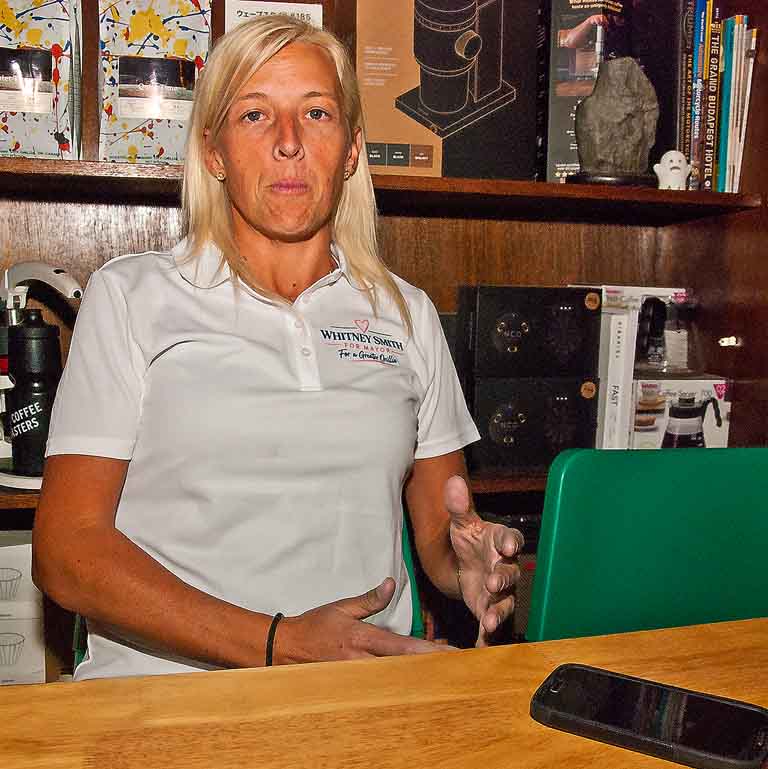
“The impact study was done in 2020 and the impact study said if the hospital moved to the other side of town it would be detrimental to the economic development and stability.”
That holds little hope for knowing how much and for how long. Orillia isn’t the first community to lose a major people place from it’s central core and people have looked at what happened next. It isn’t pretty. These kinds of things, local and local economic, don’t concern organizations like hospital boards, school boards, the province when it decides where to put significant community entities like an OPP detachment because their balance sheets don’t have a line for the expense. And they do things with great announcements that catch everyone by surprise and then say well, we looked into it from our perspective and it’s a done deal, your concerns were never considered.
“We’ve been excluded from the conversation much of this process and that makes it hard. It’s too little, too late. You should have talked to us beforehand. It’s hard to have partnership with people, they want you to be a partner with the funding, but they don’t want you to be a partner with the decisions. I think taxpayers weren’t listened to in that process. The studies they did didn’t really ask people the impact to them and what they really want. They had their goals. They asked the questions they wanted the right answer to. If you are going to ask questions in a certain way and you know the outcome you want, you’re going to ask questions in a certain way.”
“Do we have the infrastructure there? No we do not. I’m hearing numbers closer to $250 million to bring in the water/wastewater over there. We don’t have it right now and that’s going to fall on the taxpayers. We were not planning on a new hospital going over there when we built the infrastructure that we have. That’s a big issue. Who is going to pay for that? Typically the developer. If they are going to come in and develop they would be taking care of that. So is the hospital taking care of that or is the expectation the taxpayers take care of that? Right now, we’re kind of past where is it going to go.”
“My ward is Ward One, my residents are saying that’s really far away. You could take 25 minutes to get to that side of town. It’s ideally better on this side of town because it makes more sense for the infrastructure that’s already here, but they have indicated that discussion is already done. Some people think the province said it needs to go there. No they didn’t. The province has said they are indifferent to where it goes, that’s up to them (the hospital board). The province has said we do not pick we do not dictate where that goes. That busts that myth a little bit.
“There’s great synergy that has potential there (next to Lakehead). I’m not saying there’s not.”
How The Municipality Operates
Municipalities operate according to codes and by-laws, which staff then take as chiseled in stone. If your situation does not fit, your answer is no because the book does not say staff can say yes. However there are large organizations that operate on practices, which are more nimble and can accommodate occurrences not thought of a the time of writing and can be adjusted quickly for once in a life time events without abandoning the practice.
A case in point is what happened to Sweet Dreams Ice Cream during the reconstruction of Centennial (Lightfoot) Drive. Access to their business would be non-existent. They have operated in Centennial Park for events for years on a temporary basis and came up with a plan to move to their usual location in the park for the duration of construction. Well, nothing in the zoning or by-laws would permit that and staff came up with many ways to say no, including if council said yes it would set a precedent and everyone else would want the same thing, rather than find a way to say yes. Then council, instead of saying, this is unlikely to ever happen again, so we’ll make an exception. Every one turned a blind eye to the loss of business awarded to a long standing business member of the community because there was policy.
So the question is, is there merit to adopting practices and being flexible to unusual events and occurrences?
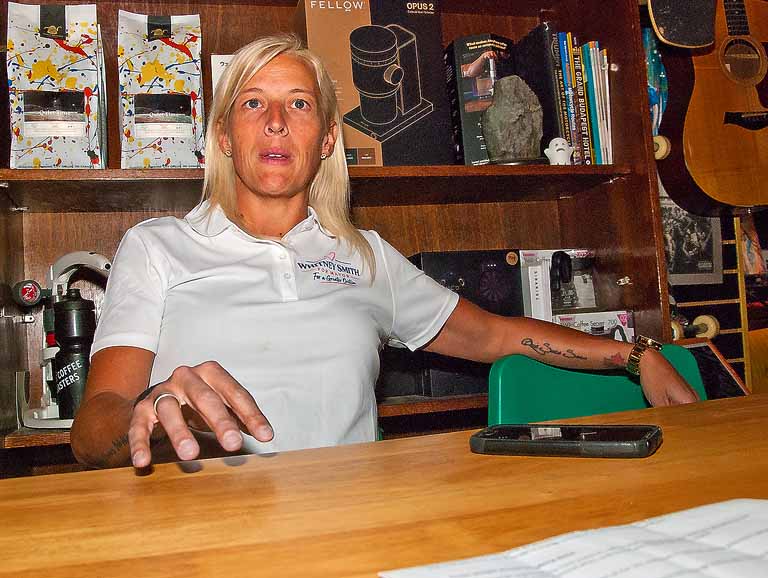
“Administration, that’s their world, they’re good at it, but we know something different. We’re the elected officials, we’re hearing from constituents, we’re their voice, we’re their representation at the table. So it’s bridging that gap. Thank you for your 20 reasons why it doesn’t work, find me the one where it does because in a situation like that it was frustrating because at the end of the day it harmed a business owner who has been contribution to the community for years. We all just want to get our ice cream in the summer.”
“Why did it have to be this difficult thing? And what’s wrong with having somebody out there? Set precedent? Give people options. Now we’ve got the marine shop, we’ve got bikes, we’ve got the pizza place down there. ‘Oh we don’t want to compete with existing places.’ What’s wrong with giving people an option? There’s nothing wrong with that. At least, I don’t believe in a restrictive mindset. At the end of the day a part of being a business owner and part of being in business is problem solving and looking for different solutions and finding ways around the issues at hand. If we have an issue at hand, let’s not talk about the reasons why we can’t do it, let’s find the reasons why we can and why it works for our community and why it works for our community and why if benefits our community.”
“We obviously want to work within the law and what’s reasonable, but we also have a voice to our residents. We know what we want. We know what we like. It’s a matter of just thinking differently and implementing. And not just hearing somebody say, ‘no we can’t’. Well, why can’t we?
The Downtown
For a very long time council has treated the downtown as if it is one big collective taxpayer, just like any other taxpayer. But it is not. It is the heart of our City. If the heart gets sick, the whole city suffers. Communities have died because they neglected their downtowns. Not that Orillia has neglected, but council sure has made the merchant jump through hoops to get decent municipal service. ‘
For example, ours is the only downtown this writer has experienced that allows snow drifts to stand for days and weeks downtown and every time the BIA asks for something to be done, the first question from council is, ‘how much are you going to pay for this?’ Yet the question is never asked of Memorial Avenue businesses when that street gets plowed many times during and after storms. The city just does it and builds the cost into its budget.
The amount of weed growth downtown is embarrassing, but if anything is to be done the BIA has to pay for it, which ignores the fact it reflects on every resident of the City.
The bottom line is the BIA has to go to council hat in hand every time something needs to be done and the City continually says, – not our problem.
Should council be changing its attitude toward the downtown?
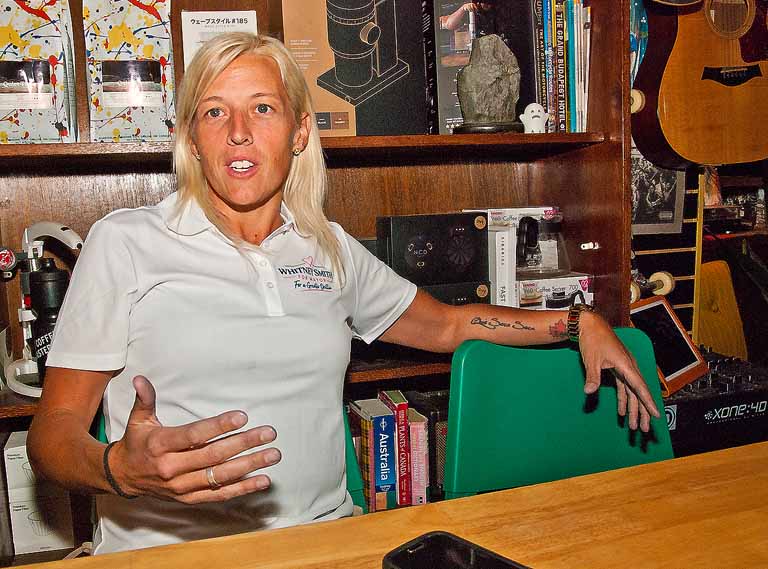
“Absolutely. It’s a matter of doing what works for Orillia and we know downtown is a huge economic driver for us. We need to do right by our downtown. It needs to be safe, it needs to be vibrant, it needs to be accessible for everybody no matter if you’re a resident of Orillia or you’re coming as a tourist. I think community safety is the biggest one.”
Another issue most reflected in the downtown is exterior aesthetics of new construction or façade renovation that do not fit with the surroundings. We have, with some pain, created a downtown like no other, yet we tolerate business owners who plop things in the middle that detract from all the effort. And that also extends to housing development in other neighbourhoods (see Orchard Point) where exterior design is at odds with the neighbourhoods developments locate in. Councillor Tim Lauer broached this subject a few years ago, can the City exert some control over how things look when it comes to development? He was told no. But how do other communities do it (which they do)?
Smith takes the broader view of development in the community.
“That’s’ part of the problem with the official plan that’s coming out. It’s going to make us a city centre as Vaughn and Concord and Brampton or any other GTA wise, it’s not Orillia. It’s not us. I don’t think our official plan should be adopted at this time. It’s not Orillia, It’s not us. We need to revisit it. We need think about it to be about what makes sense for Orillia.”
“We know we need growth, that’s undisputed, but we can have growth that makes sense of us. We have to have both. There’s the older generation that wants the historical value and wants what it looks like and the younger generation wants the modern. So there’s maybe ways to bridge the gap and maybe have the historical look matched with this modern, like there’s really tasteful ways you can bridge that gap. It’s worth looking at.”
“The concept of everything looking cookie-cutter, tight together, nobody’s got a yard, no space and parking is the worst and you’ve got a huge issue with the official plan and the idea we’re all going to live in these teeny tiny homes and maybe only one person is going to work. This is Orillia. We are not riding bicycles everywhere, we’re not rollerblading everywhere, people are driving. We have to actually see where we are. Sure we’re changing as a society and people might bike more or walk more, but realistically I haven’t seen that in my lifetime. I see more cars all the time, I don’t see less, so why are we building housing that has this concept that we’re just not going to be driving anymore?”
“I certainly wouldn’t have been for the option for less parking. We had a problem with parking before so why council of the day decided to make it less doesn’t make any sense.”
“What you see in Vaughn, what you see in Richmond Hill, what you see in Markham, that’s ideally what’s going to be coming this way if we don’t make it unique.”
Denser housing comes with social problems which are well documented. Packing people into less space may work sometimes, but not as a rule.
“If we just have some of them and we don’t create them all over the place it gives opportunity. On Westmount there’s one that’s been approved but they haven’t broken ground yet, but at some point they will and the small units are going to be $199,000, or so we are told. That could be a good first home for someone.”
“There’s places where they are applicable (smaller housing units). It makes sense for certain people. We can have some of that, but it shouldn’t be everything. We don’t want every house to look the same in Orillia. When you drive through all of our neighbourhoods, no matter which ward you are in, we have beautiful homes, we have culture, we have historical value to the homes, we have completely different looks and yards and gardens, you never see that in those other neighbourhoods,”
“Right now they’re trying to maximize as much as humanly possible. They’re trying to stack where they can, eliminate parking where they can, which just doesn’t work. I don’t know many people, unless it’s a single person who lives alone that only has one vehicle, otherwise you have partners, potentially kids and they often need to drive and have extra vehicles in the driveway, or they have a company vehicle; it’s very rare to find people who don’t have at least two, or up to four vehicles per household, so we need to make sure when we build new growth that we do it in a way that makes sense for our community. When you are on the West Ridge sided of town there’s nowhere to park. And the winter time it becomes a challenge because now people are parking in the grass which is the only place they have for snow storage.”
Climate Change And The Municipality
One gets the sense the City’s climate change action plan is not in the front seat at the moment. As mayor will you continue to put focus on the City being the leader for the rest of us in taking steps to combat climate change?
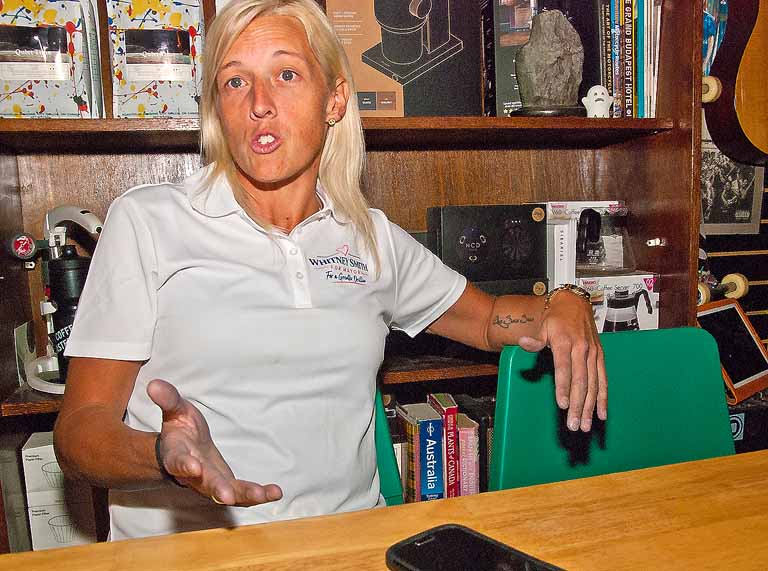
“It’s always worth looking into, take care of our land taking care of our country,”
“We can’t just look at it as like – do we support this – as a whole. We need to know what works and then we can establish from there. We know that taking our roads and reducing our vehicle lanes to put in bike lanes doesn’t make sense because there’s not enough bike users in Orillia to justify that.”
“We have the trail and people use that, so taking out lanes from a road that vehicles are using, we’re also not a community that bike rides 12 months out of the year, realistically we have some pretty harsh winters – 4 to 6 months out of the year you’re not riding a bike anyway. You are reducing the ability for vehicle traffic, which is the predominant use. When we were talking about bike lanes on West Street, we asked, go figure it out, how many people riding bikes on summer days and the answer was zero, so we’re potentially going to put in millions of dollars of bike lanes for zero bike riders. They’re riding the trail.”
Speaking of bike lanes, sometimes there are different routes for bikes. Bike lanes were part of the plan for Laclie Street on the hill. Only Pete Hegseth would be dumb enough to use a bike lane on that hill, it’s too dangerous regardless of what kind of bike lane is installed. Council fortunately saw the flaw and realized bike lanes could start and end at North Street because one block west Matchedash was already designated as a bike route and many bike riders already use the trail system to get from the north end to downtown or beyond.
“Those are the policies and decisions we have to look at. Does it match Orillia? Does this make sense for Orillia? That’s’ going to be a big part of being mayor, if elected, what do we need to look at, to revisit, what actually makes sense, what is working for us, what’s not, and we need to find the answers. Some people get stuck in this idea of status quo. No, let’s change it. We have technology now, we changing landscape on every front, how do we utilize things that make sense, how do make change that makes sense for where we are going?”
Speaking of roads, has anyone else noticed the quality of road construction is not what it used to be. University Avenue is too new to be in the shape it’s in. The parts of Laclie Street already done do not have one manhole flush with the roadway. Does the City not have inspectors passing on stages of reconstruction?
“I think it comes down to the RFP process in the selection process. Are we just awarding contracts to the cheapest because cheap is expensive all the time, so we need to revisit how we look at those contracts and who we are picking, and I think local needs to be a priority first. If we are awarding based on a point system and let’s say a chunk of the RFP is 10% or 5%, or points, however you want to say it, we need 10 points if you’re local, 10 points if you’ve done this type of contract successfully more than 10 times because cheap is expensive and we do not need to be going with just the lowest,”
“It’s a matter of what we are looking for. If we are looking for cheap, which is what we’re doing, it’s not working. I’ve seen through friends that are in different municipalities, ‘oh so and so came back to us and they need an extra million and a half because they were off.’ No, there is no, – oh, I was off – you bid for a contract at this amount of money; you should have factored in emergency issues, problems, that’s up to you as the person submitting a bid to have done your due diligence and ensured you quoted it appropriately.’
“My dad was a developer in town; he built 5 apartment buildings in town; when he brought in the contractors he would say ‘this is the date, if you go a day late and every day you are penalized, but if you finish early we’ll reward you’ Those guys always finished early. There was rarely a problem. There’s good incentive to A) continue doing good work, but also it puts accountability in place. I think municipalities have been taken advantage of for far too long in the process.”
“There also needs to be some warranties, some guarantees in place. We’re not going to spend millions of dollars for a construction project to then have to have it redone years later. If you are doing the same thing, hiring the same people who are doing the same, potentially doing not good work, we need to look somewhere else.”
“We need to be better stewards of that money on a municipal level and if it costs us a little bit more to get a better project done, then we don’t have to find out we have to dedicate more because they were off by their numbers,”
“There’s business that are not like that. There’s businesses that stand on excellence and stand by the quality of their work, those are the ones we need to look for. We’re not going to go looking for cheap, we’re going to look for the best,”
Religion
This topic is driven by Smith. Early on in the election period she made and posted some videos that had many people upset about her use of religion and worried it would influence the office. So the question is, should there be a clear separation of church and state in municipal affairs?
“I think the better way to look at that is as council we are there to represent the constituents and the people of Orillia are all sorts of faiths and cultures and orientations, so ultimately we represent everyone, so we don’t represent one faith or one party and each person’s voice needs to be heard. That could be a Christian voice, a Catholic voice, a Muslim voice, a Jewish voice, whatever, so for me, I’m in business I work with people of all kinds, I always have, council is no different, so decisions I make are for the best interests of Orillia and protecting our interests. I‘m a Christian, I don’t think you’ve seen me at council meetings doing any kinds of weird things. That’s who I am personally, my role in the city I am always going to do the right thing for the taxpayers,”
The Last Word
SUNonline has traditionally asked candidates for office what have we not talked about that is important to them.
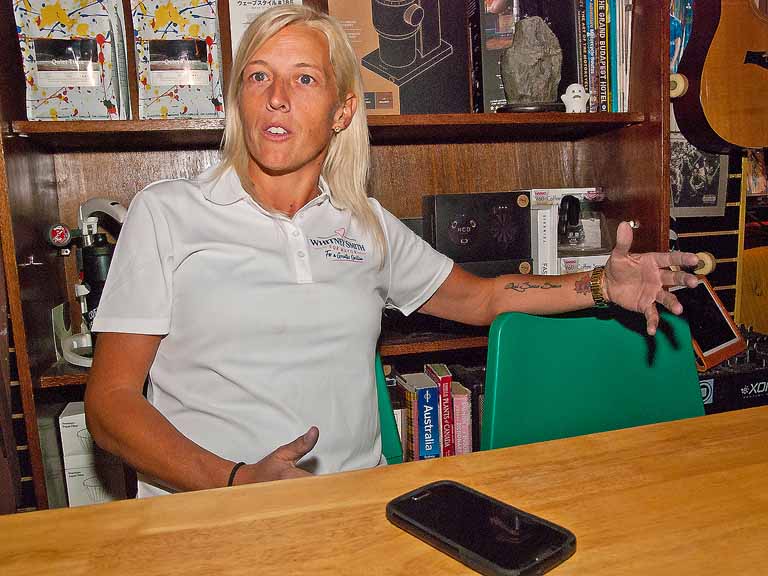
“I’m 39, I’m excited to be the female voice of Orillia. In my lifetime, we haven’t had a female mayor. I believe it’s time we change the dynamics of Orillia council. It’s never been more than two women at the table and most of the time it just been one. I think we need to seriously look at putting the right balance in. I’m the younger generation, when we are growing and we are looking into the future generations, that should be coming from somebody who understands that generation. I am from that. I understand the women’s voice and typically women are more invested in municipal politics and politics in general and I want to be their voice. I want to be the voice of women and the next generation of women. I used to say when I was a little girl, ‘I want to be the mayor of Orillia,’ There’s probably some little girl out there right now saying the same thing, so I want to send an example for young women that this is attainable and you can do this and you can have goals and dreams in life and you can see them implemented through representation and through protecting your tax payers. So I‘m excited for that,”
“As we are growing our residential end we need to grow our commercial interests in town. So I want to see our economic grow and development be something that is very focused. I own two national companies and a third that operates throughout the province of Ontario so I know expansion, I know growth, I know success. We need to bring in the right businesses, but we also need to work with our current businesses. How does a business that has 20 employees turn into a business that has 40, how do they go from one location to two or three, how do we help our current businesses grow so that we have more jobs, stability and income? I want to see good jobs with good pensions, stable incomes. I think one thing people glean on from older generations is this idea of a single income household where one partner could stay at home and raise kids and the other one could work. We have gone away from that, life is just too expensive. If we have the right jobs and we have good pensions and stability, then that could maybe become a something that becomes a goal for families again.”
“I was on the physician recruitment team, but one of the biggest issues we heard finding doctors was there’s no place for daycare. If a young doctor is coming out of university, maybe freshly married, they’re looking to start a family, but how are they going to do that? How are you going to be a doctor and not have somewhere to put your kid in daycare? We need to be looking at the needs of the community and over the last 4 years I’ve heard a lot of the issues. So now it’s just connecting the dots and connecting the people to the things we are missing.”
“There’s so many different ideas and solutions that we have yet to tap into and I think it comes from, we think differently, so I’m excited to lead in a different way.”
“I’m the largest female owned investigative agency in Canada and that didn’t happen from nothing. That happened because I saw issues and problems that needed to be solved and I did that across Canada. I know how to implement success and I know how to implement vision and I want to do that with our council. If the council as a whole doesn’t see the vision then they are going to have a hard time fighting for it. But if they can catch it and the community can catch it then we can grow together and be successful,”
Casting Your Vote
Election Day is October 26 and polling stations are open from 10 a.m. to 8 p.m. at the following locations:
Ward 1 at the Gill Street community Complex
Ward 2 at the Orillia Recreation Centre
Ward 3 at the West Orillia sports Complex
Ward 4 Simcoe County Community Hub, 250 West Street North
Mayoral Candidate Steve Clarke
Mayoral Candidate Whitney Smith
(Photos by Swartz – SUNonline/Orillia) Main: Whitney Smith is running for the office of Mayor of the City of Orillia.
Comment