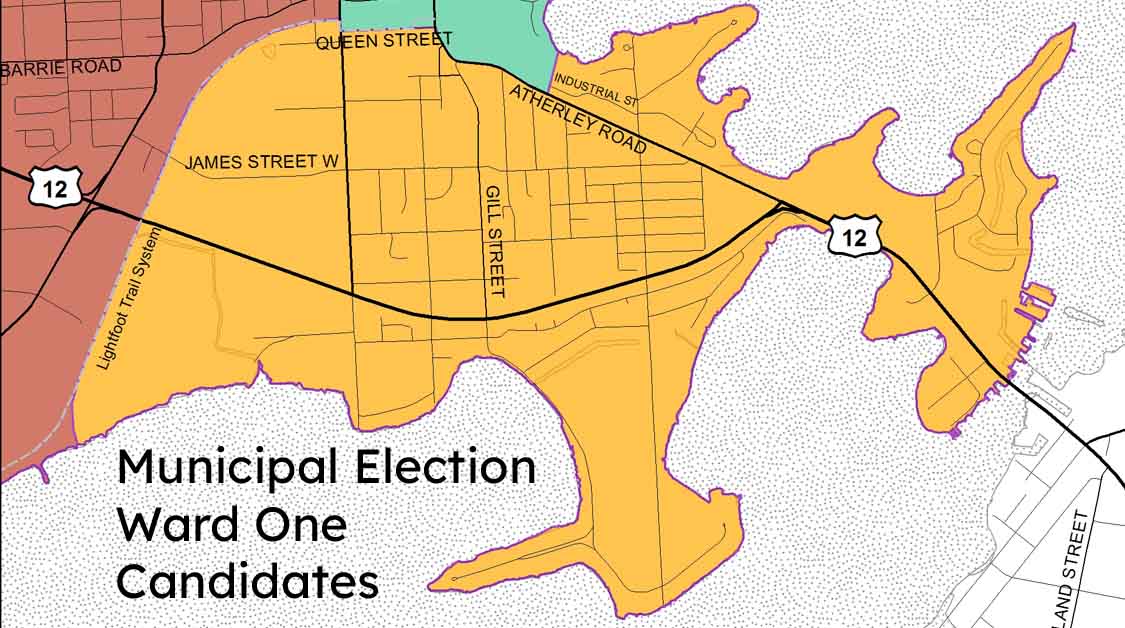
Ward One Candidates
By John Swartz
SUNonline/Orillia’s municipal election coverage, as with all elections, publishes information about each of the candidates running for office. Election Day is October 26. All candidates were asked to forward a brief bio about their connection to Orillia, and paragraphs outlining two of their platform issues. We publish the responses as written with no editing, expect for obvious typos.
In addition they were asked to answer three questions and all responses were subjected to a word count limit. So let’s meet the Ward One candidates.
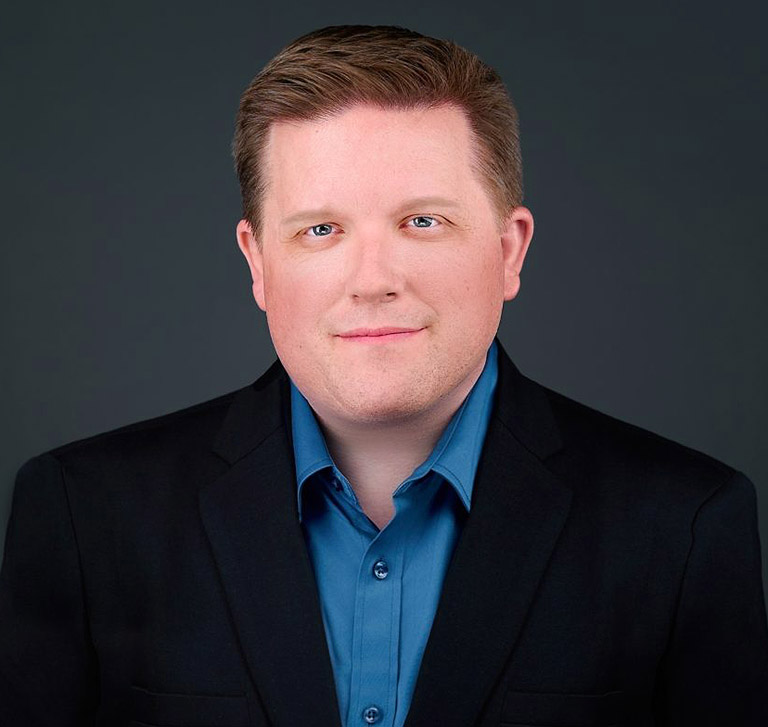
Joseph Bat 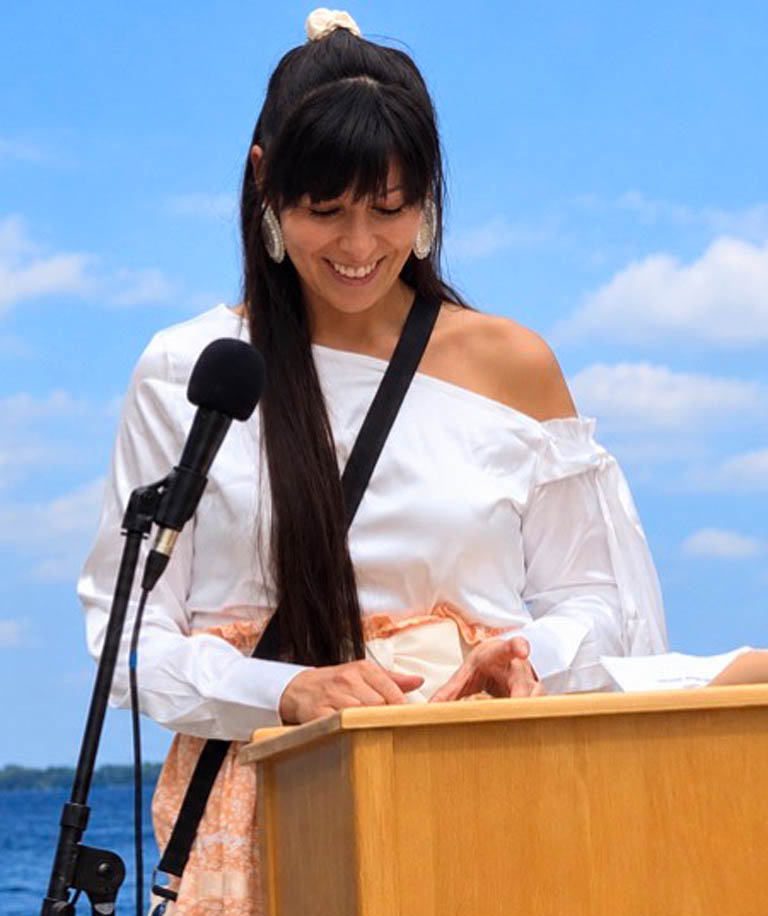
Krystal Brooks
Joseph Bat: I was born in Orillia and raised in Ward 1, which my family still calls home. Some of my earliest memories are of growing up on Crawford Street and attending St. Bernard’s Catholic School. When I started high school at Patrick Fogarty Catholic Secondary School, my family moved to Couchiching Point, where I also lived a few doors down from my grandparents.
After graduating from high school, I continued my education across Canada and abroad. I attended Sheridan College before moving to Thunder Bay to study at Confederation College. I completed my Bachelor at Bond University in Australia. My education introduced me to a wide range of subjects, including philosophy, sociology, political science, film/television, and photography.
I returned to Orillia and began a career in web design that spanned 20+ years. I’ve worked with many businesses and organizations in and around Orillia, such as: Orillia & Lake Country, Orillia Area CDC, Wavemaker Pool Spa, SunTek Window Coverings, Dentistry on West, Sunrise Yoga Studio, Hospice Orillia, and more. I also work in my family’s automation business.
I chose to run in Ward 1 because it is where I grew up, went to school, where many of my memories were formed, and where my parents live still today. I reached out to many people in Ward 1 to let them know I was considering running, and I was grateful to receive encouragement. So for me, it felt natural to put my name forward in the community where I spent most of my life. I know how to listen to people with different perspectives and how to make difficult decisions. I have also seen Orillia change and I believe my 42 years of lived personal and professional work experience would be ideal as a councillor.
Krystal Brooks: My name is Krystal and I’m from Rama First Nation but I live in Orillia. I’ve lived in Orillia, on and off, since I was 10 years old.
I’m a mother of three boys. I’m a survivor of the child welfare system and human trafficking. I’m a recovering addict and alcoholic with 6 years of sobriety and I’ve overcome homelessness.
Much of the advocacy work that I do today has been shaped by my lived experiences and my commitment to addressing systemic barriers faced by vulnerable and marginalized members of our communities.
As an Indigenous advocate and survivor of human trafficking, I have travelled across Canada, working alongside law enforcement and community organizations to provide education, training and insight into human trafficking and trauma informed approaches.
My advocacy has heavily involved raising awareness for Missing and Murdered Indigenous Women, Girls and Two-Spirit People, building bridges between law enforcement officers and Indigenous communities, and the importance of meaningful community engagement.
Through this work, I have gained experience navigating difficult conversations, collaborating with people from different professional backgrounds and bringing lived experience into discussions about public policy and community safety.
My areas of interest include truth and reconciliation, affordable housing, homelessness, mental health and addictions support, food security, community safety, environmental sustainability and responsible municipal development.
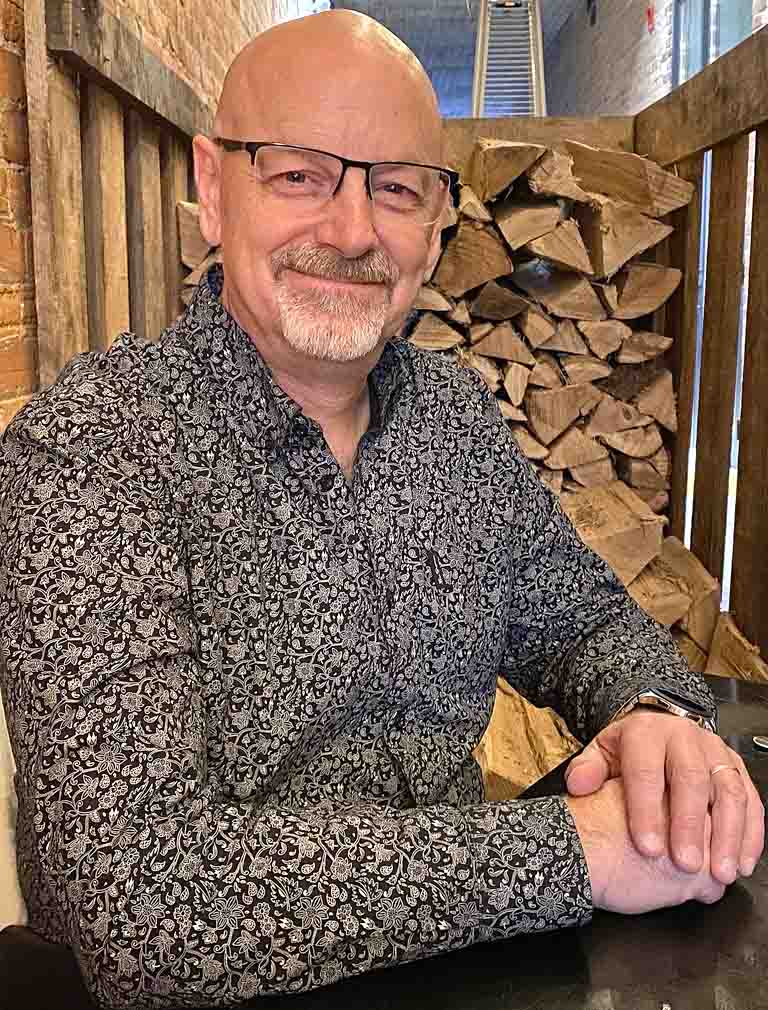
David Campbell 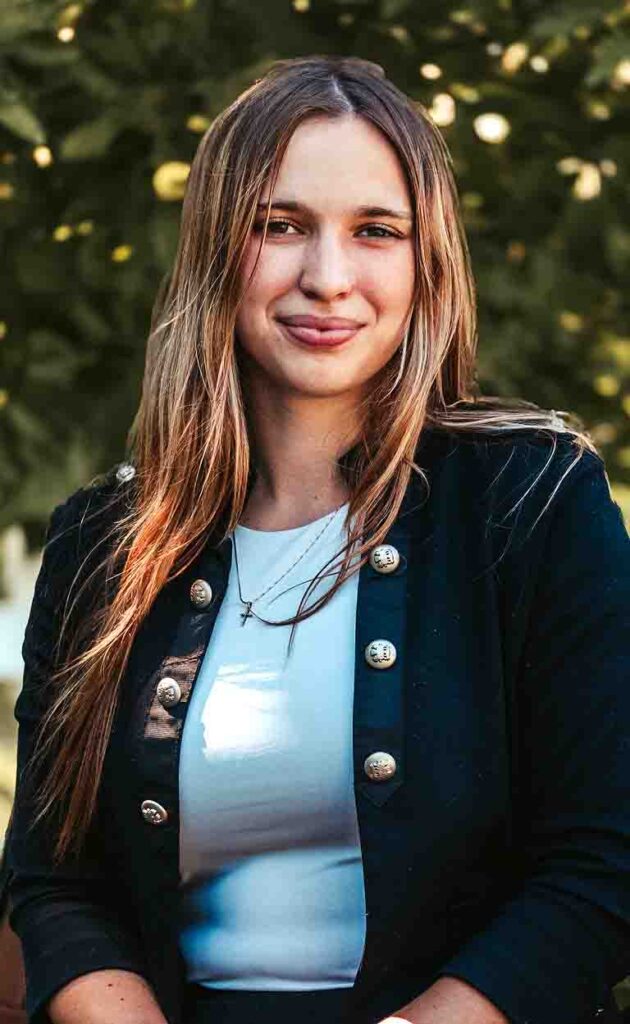
Gracii Partridge
David Campbell: My name is David Campbell. I am just completing my second term as a Councillor in Ward 1. During my time on Council, I have served on the Economic Recovery Task Force as well as the following Committees: Orillia Food, Farmer’s Market, Recreation, Transit, Active Transportation, Grants, Selection, Sustainable Orillia BOD and Downtown Orillia BIA BOD. I was born and raised in Orillia. I have lived in Ward 1 with my wife Nancy (who works at OSMH) for over 30 years. I work for a neighbouring Municipality, so I have a very good understanding of how a Municipality operates. Before first being elected, I took a course from AMO in Municipal Government to ensure I was ready for the job. I take this job very seriously. It’s not a political game to me. In fact, I often say the worst thing about being a politician is the politics.
Gracii Partridge: My name is Gracii Partridge. I grew up in Orillia and have lived here since I was four years old. Ward 1 has been my home for the majority of that time. In high school, I worked at the Orillia Public Library, which is an important part of Orillia’s learning and cultural community. I attended Patrick Fogarty Catholic Secondary School and graduated in 2020. I then attended Georgian College to pursue welding as a woman entering a traditionally male-dominated industry. I worked as a welder for approximately four to five years before moving into millwright work and an apprenticeship. During those years, I also worked with children in the foster system, which is something I continue to do today. My love and commitment to children in need eventually led me to change careers and focus more on working with children and families in private homes and through the foster system. I grew up in a blended family with five siblings and was the fifth of six children. My father is a contractor, and my mother works for Georgian College. Growing up, I often helped my dad with his work, which taught me the value of hard work, perseverance and believing in yourself, even when others may not have confidence in your ability to succeed.
I want the next generation to feel the same sense of belonging and possibility that I felt growing up here. I’m running to give younger voices a seat at the table, to help make Orillia safer for families, to restore trust in local leadership, and ensure residents feel heard and represented. Together, we can build an Orillia where every generation can thrive.
Michael Shortt
Ellen Wolper
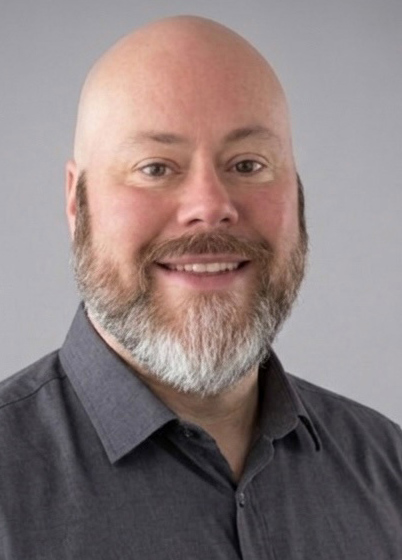
Michael Shortt: I am running for Orillia City Council because I believe we need to bring leadership, accountability and unity back to our city.
I have spent years in management, leading people, balancing budgets and making sure resources are properly accounted for. Inventory management was a major part of my responsibilities, and I learned firsthand that when you know what you have, where it is, and how it is being used, you create better productivity and better results.
After moving to Orillia, I accepted another leadership position where I managed teams and schedules across multiple campuses, from Orillia to Owen Sound. These experiences have taught me the importance of communication, organization, accountability and, most importantly, listening to the people you lead.
I am also a husband and a father of three sons. Being a family man is my greatest achievement, and I want to help build an Orillia that our families can be proud to call home.
Our councillors need to listen to the people in their wards and advocate for their concerns. Residents deserve to have their voices heard.
There is an old saying: doing the same thing over and over again and expecting a different result is insanity. It is time for a different approach. Together, we can build a stronger Orillia.
Ellen Wolper: I am a business owner downtown. I am from “away” but have lived and worked in the area for almost 30 years. I have a lot of experience advocating for downtown in many respects; for safety, snow removal, safe sidewalks, accessibility and for homeless, mental health, housing and social reform.
I see downtown as a microcosm for the whole city, the issues that affect downtown affect the whole city. A lot of my volunteer work has been behind the scenes. Going out and talking to business owners on my own initiative years ago about signage first, and then about parking, safety, writing letters, making deputations to the Downtown Business Association.
Then Covid hit and impacted both business and people and I became much more interested in people. I started letting homeless people sleep at the front of my store. I learned about addiction and neglect from the methadone clinic at the corner and government in general and from the people who frequented my storefront.
This knowledge then turned into petitions, more letters, emails to politicians, Open Forum at city council and advocating for individuals, connecting many people to services and helping them move forward. Overall, I want more care for those who are homeless, who might face addiction, physical and/or mental health issues and I want to see more forms of short term housing.
Let’s face it, the province is not meeting its commitments and so it falls to municipalities. And I want to challenge decisions made at the top that have proven to be costly. With all the corruption I have witnessed in city politics, I know there is funding to help the most marginalized. What is lacking is the political will, I want to be that will.
Candidate’s Issue Number 1
Joseph Bat: We are dealing with some large and complex challenges today that don’t have a one size that fits all solution and we need to take all voices into consideration. Some of the issues I have been hearing at the door are taxes vs. services, homelessness, and public safety.
Krystal Brooks: Poverty reduction and public safety
These issues are deeply interconnected.
Poverty affects virtually every aspect of our community, from housing affordability and food insecurity to mental health, education and employment opportunities.
We cannot expect people to build stable and productive lives when they are struggling to meet their most basic needs.
I would advocate for expanding affordable and supportive housing, strengthening partnerships with local service providers, improving access to food security initiatives and identifying more opportunities to remove barriers to employment.
People who have experienced homelessness, poverty and systemic barriers should have meaningful opportunities to participate in developing the policies and programs intended to support them as well.
Municipalities cannot solve poverty independently. We can work more effectively with Simcoe County, community organizations and other levels of government to coordinate resources, advocate for additional funding and address gaps in existing services though.
David Campbell: I don’t do this job for accolades, and I’m not interested in legacy or vanity projects. My hope is that the new term of Council will put politics aside and really focus on practical ways to make the City better. We need to concentrate much more on maintaining what we have. We need to create a culture within City Hall where all staff will take pride in the job that they do. Where our parks, sidewalks and roadways are not covered in weeds. We need an environment where, if a resident has a concern, we work with them to correct it. If we are not able to help (perhaps it’s not in our jurisdiction) then we plainly explain why.
Gracii Partridge: Homelessness is an important issue. We need to look at both the immediate needs of people experiencing homelessness and the longer-term solutions, including access to appropriate supports and housing. Both Orillia and I do not want to see this issue become any larger.
MIchael Shortt: My top priorities really all come together under three words: Community. Safety. Unity.
Our culture increasingly divides people into groups — Indigenous and non-Indigenous, LGBTQ+, left and right, Black and white, and many other categories.
We may have different backgrounds, beliefs and opinions, but first and foremost, we are citizens of Orillia and Canadians.
We have the right to believe what we believe and to be who we are. We don’t have to agree on everything to respect one another and work together.
When we focus on our common community, we begin looking out for one another. That creates greater safety. And when we stand together, there is strength in our unity.
Ellen Wolper: My passion is to figure out an end to homelessness. What is happening now is not working, this city is actively singling out people and continually moving and removing them. A current bylaw states that people cannot shelter themselves under a tent; so what are people to do, where are they to exist? There needs to be a few alternatives.
- allow people to live rough
- set-up in a designated encampment area
- and start building tiny homes.
There are never enough spaces at shelters, and shelters are not an option for everyone. It’s time to make a wholehearted attempt; figure out a humane, workable strategy for the less than one percent. Orillia has more than half the homeless that Barrie has for a city that is a fifth the size. This is untenable. (Continued below)
Candidate’s Issue Number 2
Joseph Bat: I’ve heard from several residents who feel they are paying more in taxes while seeing a decline in services. I have heard a desire for both support for people experiencing hardship and improved enforcement when laws are broken or public safety is at risk. People deserve to feel safe in the community. Orillia also needs housing options that people of all income levels can afford.
Krystal Brooks: Public safety:
Involves more than policing and responding to crime after it occurs. It also means identifying and addressing the circumstances that contribute to crime and victimization.
My approach to this would emphasize prevention, accountability and collaboration.
I would advocate for stronger partnerships between police, mental health professionals, addiction services, social service providers and community organizations. We need coordinated responses that address immediate safety concerns while also helping prevent recurring incidents.
I would also prioritize crime prevention initiatives, support for victims and survivors, improved community engagement and evidence based approaches to addressing repeat offences and chronic public safety concerns.
As someone who has worked extensively in survivor advocacy and provided education within policing environments, I understand the importance of both effective law enforcement and trauma informed approaches to community safety.
I believe we can support our police services while also recognizing that police officers cannot independently resolve every social issue they encounter.
David Campbell: The main goal of the new term of Council should be to address the homeless issue and safety concerns in the City. Regardless of your circumstances, no one is above the law. If you are breaking the law, you should be held accountable. Orillians are very compassionate and want to help. In fact, Orillia is doing more than many Cities are to help. To address addiction and mental health, it is my hope is that the recently opened Community Connection Hub will go a long way to help these folks to get the help they need. This is a very serious societal issue that will certainly not be solved solely at a Municipal level. All levels of government along with local organizations need to work together. I also strongly believe that pharmaceutical manufacturers should share some of the blame in having created this crisis and be held financially responsible to address it.
Gracii Partridge: The housing market and affordability is a big concern within Orillia. I would work collaboratively with the City, Simcoe County and the provincial government to identify practical opportunities to increase housing options in Orillia and make it easier for people to find a safe and affordable place to live without having the constant struggle of living paycheck to paycheck.
Michael Shortt: When we focus on our common community, we begin looking out for one another. That creates greater safety. And when we stand together, there is strength in our unity.
This principle also applies to City Council.
For too long, division and disunity have prevented council from working effectively together. Poor decisions can have consequences that cost taxpayers millions of dollars.
I believe council needs to put personal agendas and division aside and focus on what matters most: the people of Orillia.
Ellen Wolper: And after homelessness is resolved, time to look at the top 1%; the few that are ruining it for the rest of us. There has been such a drain of public funds and our collective brain cells from abuses of power; whether it’s the “breach of trust” that was parking lot #15, the gutting of downtown with the increase in parking rates, the use and misuse of strong mayor powers, the CAO hiring process, the unconstitutional treatment and the hemorrhaging of public funds to hire bylaw, OPP and private contractors to deal with homeless rather than help the situation. Even to the unconscionable removal of a couple of benches and the embarrassment to the city from officials not understanding that in order for outreach services to work, they need to reach out to people somewhere! Time to end the social disorder that is the government and remind them that their sole job is to care for all of us.
SUNonline/Orillia Question Number 1
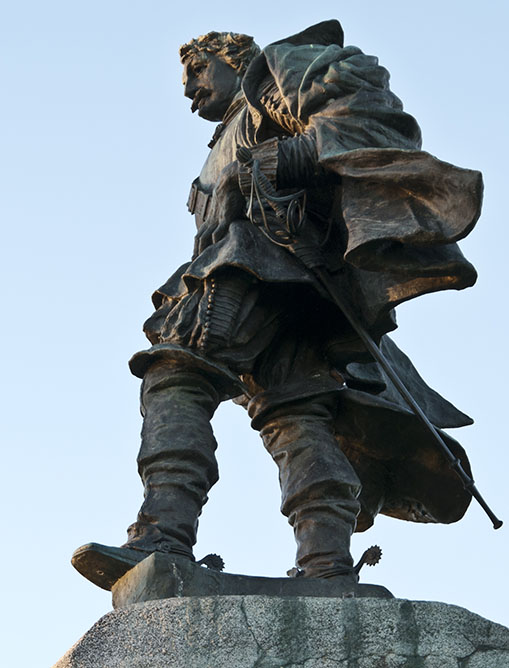
All candidates were asked for their position regarding the Champlain Monument. This is perhaps the most obvious and frequent topic of late. SUNonline/Orillia would not normally ask about anything that is an ongoing community debate, instead of topics we think should be the attention of the public, but we are curious if any candidate has an argument that does not rely on an emotional response.
Joseph Bat: Many residents have spoken to me about their desire to see the Champlain Monument return and in a respectful way. I am in support of working together with First Nations on repairing our relationship and having a partnership that can be one of mutual respect and an opportunity to educate.
I also believe careful consideration needs to be given to the financial costs. I believe Council has an opportunity to take something that has become a source of division and, by working with First Nations, turn it into an opportunity for greater understanding.
Krystal Brooks:
I would support the return of the Champlain Monument if it was truly what the majority of Orillians and Indigenous people locally want. Consultation, respect, inclusion, due process and compromise are all important elements for this to happen.
I feel I lit the match that burned the bridge between Orillia and Rama. The reasons why are less important than the way we move forward. I strongly believe the Champlain Monument has the power to unite us, as much as it had the power to divide us.
If elected to Council, I know I could help our two communities reconnect and reconcile. I am member of Rama First Nation, and I reside in Orillia. Both communities are my home and I love each of them equally.
I can try to make a difference where it really counts and I believe I can do that best on Council where I would try my best to listen, learn and understand the voices of others
David Campbell: I have always felt that there was a way to display the pieces with a proper explanation of the history of the time. However, in light of what has occurred over this term, any possibility of that happening is much more difficult. Still, I believe that there may be a way to work together to reach a solution. We have heard from people for or against the return of the monument saying that they represent ‘the majority’ of Orillians. I felt that the best way to find out how the ‘actual majority’ feels would have been to place the question on this fall’s election ballot. Unfortunately, by the time the report came to Council, the deadline to do so was missed. So now it is up to the new term of Council to reflect on what they have heard while campaigning and decide the direction going forward.
Gracii Partridge: Personally, I would like to collaborate with all parties involved, including those who want to be part of the conversation, to find a respectful and practical solution to this issue. I believe it is important to listen to the different perspectives involved and work toward a solution that considers the history, values and future of our community. The history behind the monument should also be studied and brought into the conversation. Everyone deserves a voice, and the discussion should be open to everyone who wants to be a part of it.
Michael Shortt: The removal of the Samuel de Champlain monument represents a deeply complex issue involving history, reconciliation, culture and municipal governance.
I recognize that there are legitimate concerns and strong feelings on both sides.
Some residents believe the monument’s 1925 design presents Indigenous people in a way that reflects harmful historical attitudes and stereotypes. From that perspective, modification or removal is seen as an opportunity to acknowledge the past and create public spaces that are welcoming to everyone.
Others believe the monument is an important part of Orillia’s cultural, artistic and historical heritage. I believe an issue of this cultural and financial magnitude should not simply be decided without meaningful input from the people who live here and pay for our public spaces.
Our history belongs to the community. When decisions of this significance affect our shared identity and public spaces, residents deserve a direct voice in determining how that history is represented
Ellen Wolper: The monument was
done and should have been done when the most important stakeholders;
representatives from the Huron-Wendat Nation and the Chippewas of Rama First
Nation left the committee years ago. The opportunity has been missed to create
an alternative memorial and irreparable damage done with McIsaac’s unilateral
decision to install, remove and store the monument, again without any public
input.
When a part of the community says they are hurting, politicians should listen. Nothing has improved, things have regressed in Orillia when it comes to any steps towards reconciliation. At the very least, if elected, I would like to know the amount McIsaac’s decision cost the city and pledge at least the same amount to a first step towards reparations, like housing, considering there is a disproportionate number of First Nations that are unhoused. Statues can also be sold/donated to a community for whom it has some meaning.
SUNonline/Orillia Question Number 2
Candidates were asked for their proposals regarding economic development, in the context of a new direction taken in 2014 – but not fully utilized, and international developments that could mean many more manufacturers who may establish, or expand, production of goods here in Canada while they may have little or no capacity at the current time. In short, what is the plan to get ahead of the curve in a changing economic climate?
Joseph Bat: Being proactive rather than reactive; we need to support the businesses we have while making Orillia an attractive place for new businesses to invest. That means looking at ways to streamline permits and approvals where possible and listening to the business community. We should also work with our partners to actively promote available commercial properties and the advantages of doing business in Orillia.
Orillia’s location gives an advantage that we should capitalize on, particularly for film production. Commercial enhancement also needs to include the practical things that make businesses successful. Parking and accessibility are important, as are well maintained roads and sidewalks, reliable transit, clean and welcoming public spaces, and good transportation connections.
If we can support the businesses we have, attract responsible new investment, and expand our commercial tax base, we can strengthen our local economy while helping to keep the tax burden more manageable for residents.
Krystal Brooks: I believe Orillia needs an economic development strategy that is proactive rather than reactive. We should not be waiting for investment opportunities to present themselves. We should be identifying emerging industries, understanding what they need to succeed and working towards that economic growth.
We have a responsibility to ensure that the economic decisions we make today do not compromise the health of our environment or the well being of future generations. I would like to see Orillia prioritize attracting businesses and industries that align with our environmental commitments, including sustainable manufacturing, clean technologies and Canadian made goods.
I believe what should distinguish our approach is that we measure economic success by more than the number of businesses we attract or the amount of investment we secure. I want to see us attract employers who offer stable employment, fair wages and opportunities for residents to develop new skills, while minimizing the environmental impact of development and ensuring growth is helping reduce poverty in our community.
David Campbell: I think our Economic Development department should provide Council with frequent updates (monthly perhaps) as to activity regarding not only attracting new businesses but retaining the ones we have. Of course, I’m not suggesting that staff aren’t doing a good job, only that Council needs to be more in tune with what is happening. Also, perhaps a working group/committee of Council could be formed that would include our ED staff as well as representation from the Chamber of Commerce, the Downtown Orillia BIA and other interested parties throughout the City. Working together we can create an economic environment that businesses will want to be a part of.
Gracii Partridge: I would promote economic development by making Orillia a place where businesses want to open, grow and invest. That means reducing unnecessary red tape, supporting our existing local businesses, attracting new employers, and encouraging development that creates good paying jobs. I would also work to strengthen tourism and our downtown, because both bring new money into our community and support local entrepreneurs. We need to actively promote Orillia’s advantages: our location, waterfront, skilled workforce, and quality of life to potential investors and employers. I believe this approach will work because when we make it easier to do business and actively pursue new opportunities, we strengthen our tax base, create jobs and build a more prosperous Orillia.
Michael Shortt: Orillia should be a place where businesses want to come, invest, grow and create jobs.
My approach is straightforward: reduce unnecessary bureaucracy and make it easier for businesses to succeed. We need to examine the processes that hold businesses back and find ways to make starting and expanding a business in Orillia simpler and more efficient.
You want to buy Canadian? This is where it starts — in our own community.
We also need to take greater pride in our downtown core. Our streets, sidewalks, landscaping and public spaces should be properly maintained. We are a tourist town, and we need to start acting like one.
Orillia has tremendous potential. Rather than spending millions on things that don’t deliver meaningful value to residents, let’s put our resources into the city itself —infrastructure, our businesses, our public spaces and basic services residents depend on.
Let’s make Orillia a city people want to visit, a city businesses want to invest in, and a city families want to call home.
Ellen Wolper: Small business is the economic engine of the country. It has been an uphill battle for bricks and mortar stores since the pandemic, trying to compete with online businesses and big box stores. Downtown was also hard hit with the rise in parking rates when many downtowns have some form of free parking.
In the big picture, Canada needs to isolate and become independent. If its “elbows-up” and “buy Canadian” then Orillia can play its part by finding niche markets. Tourism could play a big part with the developed waterfront. Orillia’s reputation in the arts, theatre, visual arts, and music draw people to town.
Orillia can become a leader in manufacturing tiny homes, to make up for its horrible treatment of homeless people and become a vendor to surrounding communities with its ideal, central location. As much as housing is a provincial possibility, Orillia could find its niche there.
SUNonline/Orillia Question Number 3
The state and scope of homelessness is not something of Orillia’s making; other levels of governments bear responsibility by way of legislation, regulation and lack of using the tools available to get corporations to play ball. Yet, those levels of government are comfortable leaving municipalities to clean up the mess when municipalities do not have the financial and human resources to do much of anything. Governments in other countries have solutions that appear to stick and work, what do you know of them? So, what are you willing to do to put pressure on higher levels of government for meaningful change?
Joseph Bat: Housing First has been used with the core idea that people experiencing homelessness are provided with basic housing instead of expecting all other challenges to be resolved first. For some people, housing still needs additional supports and, importantly, Housing First requires the supply of housing.
I would agree that the provincial and federal governments need to provide more support and I would advocate for that. Orillia cannot be expected to solve every reason for homelessness. Where appropriate, I support examining partnerships that make better use of existing assets. We should also consider if additional warming services are needed using a data-driven approach. I also think an important piece is communicating what services already exist and looking for ways to strengthen those initiatives and increase awareness of them, as well as focusing on prevention where possible.
Krystal Brooks: Krystal adequately answered the third question by stating her top two priorities above.
David Campbell: Let’s be completely honest here, the City of Orillia does not have the funding to tackle this issue alone. In my opinion, the primary issue was created when the federal government discontinued supportive housing and made it a Provincial responsibility. The Province, in turn, made it a Municipal responsibility. These upper-level governments were somehow convinced that the private sector would keep up the supply of affordable housing. Of course, as there is less profit in offering that, it hasn’t happened. Orillia is certainly trying to address this issue but can’t do it alone. All Municipalities in the province need to be loud in demanding action from the Province and the Federal government to address this issue. As a municipality, we need to be very vocal in demanding support from both the Province and the Federal Government.
Gracii Partridge: I believe every person experiencing homelessness deserves to be treated with dignity, compassion, and respect. We need to work closely with organizations already on the front lines to ensure people have access to safe shelter, mental health, and addiction support, and a genuine pathway towards permanent housing. Orillia’s current community safety plan emphasizes coordinated outreach, supportive housing and stronger connections to services and I want to build on that approach. We also need to recognize that homelessness has many causes, and lasting solutions require more than simply moving people from one location to another. My goal is to help people move from crisis to stability while also ensuring our neighborhoods, parks, and downtown remain safe and welcoming for everyone.
Michael Shortt: Homelessness is a global issue, and like many communities, Orillia has seen an increase in homelessness since the pandemic. This is a difficult issue that requires compassion as well as accountability.
Many people require meaningful support. We need to work with our provincial and federal partners to pursue practical solutions that connect people with the services and assistance they need.
As a city councillor, I will work with the Mayor, council, provincial and federal representatives, community organizations and law enforcement to find better solutions.
At the same time, we must recognize that residents have the right to feel safe in their own community. We need to work with law enforcement and our government partners to address public intoxication, drug-related issues and disorder in a way that protects the public while ensuring people have access to appropriate help.
Compassion and community safety do not have to be opposing ideas. We can have both. Let’s Make Orillia Stronger. This is my city. This is your city.
Ellen Wolper: Housing is the key to everything; social, emotional, mental and physical health. No one is going to “get better” under the current system. London, Sudbury, Thunder Bay have gone ahead with supervised encampments. Kitchener was forced by a provincial court ruling to allow an encampment to stay and it has been far more costly than to choose and support a site.
Whether you think housing is a human right or a reward for good behaviour; many of our current practices are hurting more than helping. What to do?
- strike down the existing tent bylaw that makes it illegal to shelter yourself
- choose a designated encampment site
- begin a tiny home community
- maintain a 365 day a year centre
Police said the warming centre was moving things in the right direction, library said it was a quiet winter for them. We know what works, we just need to do it.
Casting Your Vote
Voting has already begun. There are advance polls at the Orillia recreation Centre October 14 from 1 to 7 p.m. and October 16 from 10 a.m. to 4 p.m. The West Orillia sports complex has advance polls October 20 from 1 to 7 p.m. and October 22 from 10 a.m. to 4 p.m.
Election Day is October 26 and polling stations are open from 10 a..m. to 8 p.m. at the following locations:
Ward 1 at the Gill Street community Complex
Ward 2 at the Orillia Recreation Centre
Ward 3 at the West Orillia sports Complex
Ward 4 Simcoe County Community Hub, 250 West Street North
(Photos by Swartz – SUNonline/Orillia and Supplied)
Ward Three Candidates
Ward Four Candidates
Mayoral Candidate Steve Clarke
Mayoral Candidate Whitney Smith