Council Preview
By John Swartz
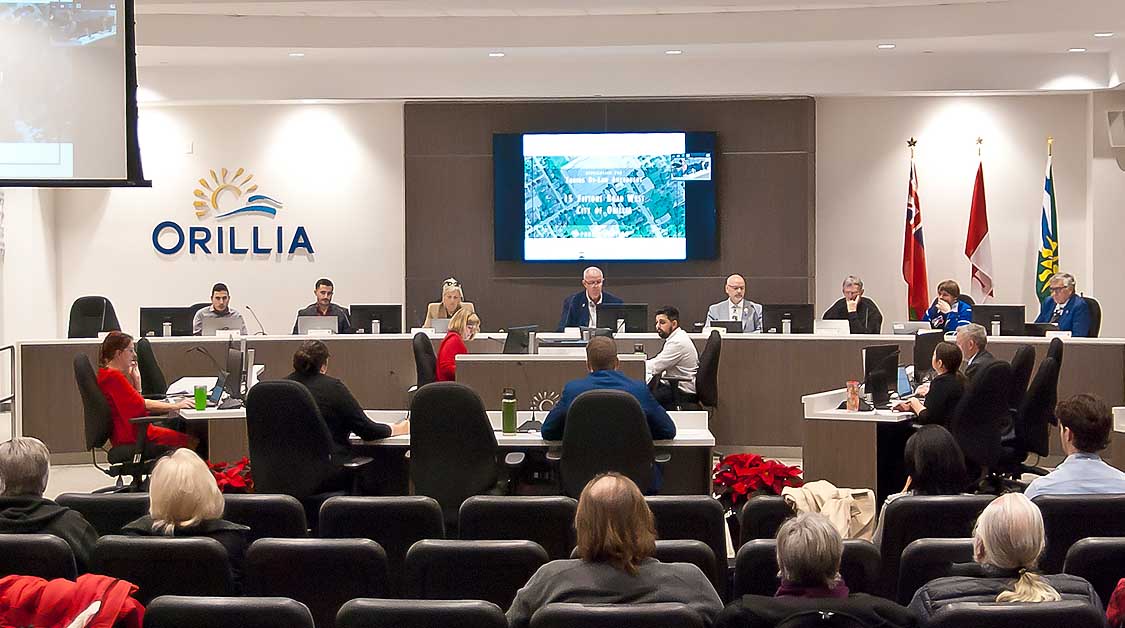
Orillia council meets at 1p.m. Wednesday August 5 for a special meeting of council regarding Lakehead University’s expansion plan and Orillia Soldiers’ Memorial Hospital’s development planning.
The agenda is very light on details as to specifics for discussion, but looking at the council information package from last Friday a foundation of what the city is asking both parties is found. Also a 400 page report to council prepared by the CAO, Amanpreet Singh Sidhu, was part of the last council meeting, though it was not distributed until the day of.
Both the information in the council package and the report asks some very important questions regarding the decision process for a new hospital and who made those decisions.
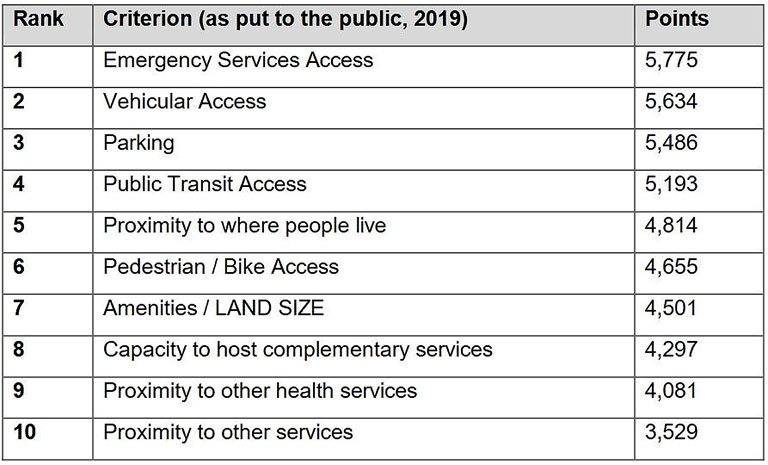
While the hospital has made much of a community survey it conducted, the report to council states the response totals to parameter questions of the survey were largely ignored and instead the size of a new site became the driver of decisions. Indeed, “The new-site decision came before the criteria survey.”
Furthermore: “There was no downtown option to react to. The public could not express a view on a downtown option because none was ever before them: “No downtown sites were submitted to OSMH for consideration” [10 Jul 2026]; and OSMH confirmed on June 23, 2026 that no Downtown Area lands were submitted”
The report also includes results of an economic impact study the City had done by Urbanmetrics inc. and presented in February 2020. The upshot of that report backs up contention by SUNonline/Orillia that there is significant spending done by hospital staff at downtown businesses, that many businesses downtown do business with the hospital that would affect their survival if the hospital was not present, and there is significant co-location of offices and services near the hospital. The study also speaks to what might happen if the hospital relocated outside the downtown core, which, as can be expected, a lot of the current benefit to the downtown would be lost.
Regarding the university, which is hanging its hat on expansion plans contingent of the sale of 25 acres of land donated to the university to build a campus, the original agreement contained some commitments by the university for expansion, and the report states”
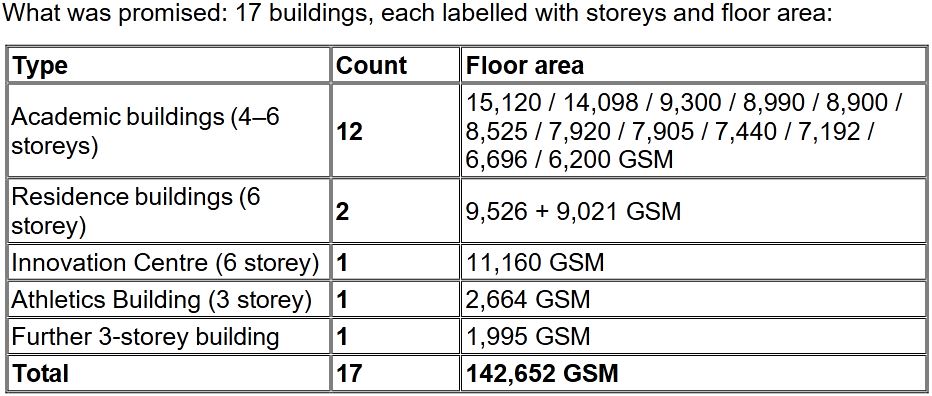
“The 85 acres were never built out to anything approaching the 2008 plan. The Construction Target of 450,000 sq ft, and the Base Construction Target of 225,000 sq ft, both exclusive of residences, fell due on the 15th anniversary of registration, 20 February 2024. Instead the university expanded in Barrie. The scope of expansion committed to can be seen in the chart below.
Furthermore staff during its investigation found there is no provincial requirement, with examples, ownership of the land a hospital occupies is not required, so a sale may not need to occur. And the university’s claim that expansion of the one building scheduled depends on money received from any sale. Staff found the grant program the university stated is not available to the university.
The report primarily asks for staff direction regarding what happens with the land, and offers some alternatives which protect the City should either the hospital project or the university project fail to happen.
What is clear from the report is a major player in this game, the City, was not consulted until decisions were made, some misinformation occurred, and the community, though consulted, was involved in a dog and pony show.
The Council Package Item
Contained in the package are a series of questions posed by staff to both the hospital and the university in a letter dated July 30. A written response was requested, none was received.
It is likely the discussion at the special meeting will rely on the questions forwarded to the hospital and university.
The questions are organized under 20 headings. Below is a sample of those headings and sample questions posed to each party, or to both:
A. The Civic Campus, defined
A1. [Lakehead] What does “Civic Campus” mean, concretely, in the Orillia proposal: which functions, which partners, which binding commitments? [term used from March 2026; never defined in materials provided]
A2. [Lakehead] Is the civic-campus model implemented at Lakehead’s Thunder Bay campus, where NOSM (Northern Ontario School of Medicine University) – separated from Lakehead and Laurentian University in 2021) and the regional hospital sit adjacent to the University? What has twenty years of that adjacency measurably produced, and what is replicable in Orillia without a medical school? [City question of April 9, unanswered]
B. Synergies: definition, measurement, accountability
B1. [Both] List the specific synergies the partnership will produce between the hospital and the campus.
B2. [Both] For each synergy: the objective measure, the baseline, the target, the date, and the data source.
B3. [Both] Who is accountable for delivering each synergy, and to whom do they report?
C. OSMH: the buyer’s capacity and timeline
C1. [OSMH] At what stage does the Ministry’s capital process require completed site control, and in what form? [asked July 21; provincial contacts requested]
C2. [OSMH] What amount, if any, has OSMH budgeted for site acquisition, and from what source (local share, foundation, other)?
C6. [OSMH] Recent Ontario new hospitals average about 49 acres, and every comparable regional build sits on 40 to 62 acres; Collingwood, a smaller community, built on 54. Why is 25 acres adequate for Orillia, and what analysis supports it?
D. Lakehead: the capital stack
D3. [Lakehead] The description of the University’s $15M has developed over time, from “confirmed” (April) to a composition that “will continue to evolve” (June 22) to a matter of “institutional governance” (July 19), while the 2025 announcement recorded a feasibility study still setting fundraising goals. What is the current source and status of the contribution (cash, pledges, financing, future revenues), and by when is each expected to be in hand? [April: “confirmed”; June 22: “will continue to evolve”; July 19: “institutional governance”; 2025: feasibility study underway; statement reported in the local press “does not have”]
D5. [Lakehead] What is the current status and realistic timeline of any federal pursuit: EOI (expression of interest) filed or planned, stream intended, decision horizon? [no application; 2026 intake closed July 15]
D6. [Lakehead] When will design documents reach a construction-ready stage, and what is the earliest credible date for shovels in the ground? [April 8 procurement was architect selection]
D7. [Lakehead] On Lakehead’s own figures, what is built, and by when, if no federal grant ever arrives?
E. Sequence, safeguards, value, and the record
E1. [Both] Does either institution object to Council obtaining an independent appraisal before any release of the City’s registered interest? If objected, what is the basis of that objection? [asked July 21]
F. The timeline, site control, and the suggestion of delay
F1. [OSMH] What specific Stage 1.3 deliverable cannot be completed unless the City transfers ownership of the land now, as opposed to the City providing documented site control (a comfort letter or long-term lease)? [Ministry manual, pp. 38 to 39]
F2. [OSMH] Collingwood General and Marine Hospital advanced through Stages 1.2, 1.3 and into Stage 2.1 on the strength of a 2023 development agreement for its site, and completed title only in April 2026, about eleven years after planning began in 2015. What distinguishes OSMH’s position such that it requires ownership now, at the start of Stage 1.3? [CGMH chronology; Town of Collingwood, April 14, 2026]
G. The size of the site, and the balance of the 85 acres
G1. [Lakehead] Is the proposed sale of 25 acres the entirety of the land Lakehead intends to convey from the 85 acres, or the first of more than one intended disposition?
G3. [Lakehead] Will Lakehead agree that the remaining approximately 60 acres are to be retained for and developed as a university campus, consistent with the 2008 purpose, with a reverter to the City if they are not?
H. The 2008 gift
H1. [Lakehead] The City conveyed roughly 85 acres in 2008-09 for nominal consideration ($1), for university purposes. Does Lakehead accept that the land was placed in-trust by Orillia’s taxpayers, not a purchase, and that it remains subject to the City’s registered interest to beyond 2059? (2008 Development Agreement; SC718474)
I. Price, value, and who captures the uplift
I1. [Both] On what basis was the price between Lakehead and OSMH set: an independent appraisal of the land, an arm’s-length negotiation, or the amount Lakehead needed to complete its capital stack? Please provide the basis. (no appraisal on the record)
I2. [Both] The City’s comparator estimate places the 25 acres materially above $15M, and no appraisal exists. If the land is worth more than $15M, who captures the difference, and is the City being asked to enable a below-value transfer of land it donated?
J. The OSMH-Lakehead memorandum of understanding
J1. [Both] Please provide the signed MOU. Does it grant OSMH any option, right of first refusal, or expectation over land beyond the 25 acres? (requested June 22 and July 21; not provided)
J2. [Both] Does the MOU commit OSMH to acquire only the Lakehead site, and did it foreclose consideration of any alternative site?
J3. [Both] What consideration passed under the MOU, and what are each party’s obligations if the City does not consent to a sale?
K. Authorization, and the County of Simcoe
K1. [Both] On what dates did the Lakehead Board of Governors and the OSMH Board formally approve this transaction, and on what terms? Please provide the resolutions.
L. The 25-acre criterion, and conflicts of interest
L1. [Both] Who set the 25-acre minimum-site requirement, and on what date, relative to the point at which Lakehead’s land was identified as available? Was the criterion fixed before or after the Lakehead parcel was in view?
**Note; SUNonline/Orillia has repeatedly stated the hospital board originally said 20 acres was needed and changed the amount after SUNonline/Orillia pointed out a site of that size existed close to downtown).
L2. [OSMH] Was any analysis prepared to justify 25 acres as the entry threshold, and will it be produced? None has been provided to the City.
L2A. [OSMH] Was any downtown, central, or brownfield (intensification) site evaluated in the site-selection process against the same criteria as the greenfield sites? The interim CEO has stated that no lands in the Downtown Area were submitted for consideration. How is that reconciled with the community’s stated central-access priorities? [OSMH letter, June 23, 2026]
M. Planning, servicing, tax, and cost allocation
M1. [Both] A hospital is not a permitted use on the parcel as currently zoned. What planning approvals (zoning by-law amendment, official plan amendment, severance, site plan) are required, who bears the cost and the risk, and what is the realistic timeline?
M2. [Both] Is west-Orillia water and wastewater capacity sufficient for a hospital of this size, and who funds any off-site servicing upgrades and applicable development charges?
N. The existing downtown hospital site
N2. [OSMH] Has the community been consulted on relocating the hospital from downtown, and on the fate of the current site, given the City’s 2020 study warning of the downtown employment impact?
O. The hospital’s land program, and the adequacy of 25 acres
O1. [OSMH] What are the planned bed count and gross floor area of the new hospital, and does 25 acres accommodate the building, parking, a helipad, ambulance and service access, utility corridors, and future expansion?
O4. [OSMH] Has OSMH evaluated a compact or vertical hospital design that would require materially less land, and could open central or brownfield options? If such an analysis exists, please provide it; if not, on what basis was 25 acres adopted as the entry threshold without it?
P. Provincial funding, and the lease alternative
P1. [OSMH] Is any provincial funding approval or stage endorsement contingent on the specific Lakehead site, as opposed to any adequate site or form of tenure? If so, please provide it.
Q. Failure scenarios, and reversion
Q1. [Both] If Council consents and the land is sold, and the hospital is then not built (whether for funding, approvals, or a provincial decision), what happens to the 25 acres, and will it revert to the City?
R. Indigenous consultation
R1. [Both] The land lies within the Williams Treaties territory acknowledged by both institutions. Has there been consultation with the affected First Nation or First Nations on the disposition of this land and on the hospital project, and what has been its outcome?
S. Transparency and process
S1. [Both] The record shows Lakehead and OSMH advanced site and sale plans in early 2026 before the City, the covenantee and the community’s steward, was engaged on the substance. Why was the City not brought in earlier, and how will the parties keep the community informed from here?
T. The hospital’s local share
T1. [OSMH] Under Ontario’s capital model, the hospital’s community funds a share of construction plus equipment. Is the $15M land cost part of that local share or in addition to it?
As one could glean form the nature of the questions, some of the information the city and the community has in hand is contradicted by investigation. This should be eyebrow raising.
This could be buttressed by statements in responses to City correspondence with both Lakehead and Soldiers’ that are at times dismissive of the City and therefore the community.
The City and community have been treated as bumpkins in all this and that should not stand for projects that are of such significance.
In a manner of speaking both have said, ‘all that future planning you have done, that’s not going to happen’.
It is dismissive of concerns people have about what happens to the downtown core, the heart of the City, should the hospital relocate. Below is response to the City to provide answers on paper to the questions and others outlined above by of Dr. Gillian Siddall, president & vice-chancellor of Lakehead University and Tom Roberts, interim president & CEO of Soldiers’ illustrating this:
“Insofar as Council directed that a Special Council Meeting be convened so that it could hear directly from Lakehead University and OSMH, we believe that meeting – not a written exchange in advance – is the appropriate forum for Council to ask questions, hear directly from the parties, and engage in discussion.”
“We therefore look forward to addressing the matters relevant to Council’s decision regarding the Lakehead lands directly with Council on August 5 and responding to Council’s questions in that forum.”
What is also glaring is the absence of the province (to which the City is asking for more information from that end, and also asking for direct contact information of provincial officials both the hospital and Lakehead are communicating with, which has not been provided) in the discussion. As can be seen from recent history, the province is going to do what the province wants and to heck with local concerns.
There is an arrogance exhibit in this affair which leaves one with the impression the hospital and university think Orillians do not need to know anything, and wouldn’t understand it if they had the information. It also is arrogant for them to think no one would look into their record of statements regarding the hospital and university’s aims. On the hospital’s part, this arrogance goes back to eliminating board seats previously held by members of the community.
The City has noticed this:
“Each question your organizations have put to the City about this meeting has been answered promptly and in writing, including this one, within the deadline you set. The City’s requests merit the same treatment.”
The process has not stood up to light. The community has been asked to acquiesce to tacitly approving a course for land given for other purposes and no questions should be raised. The process for arriving at the current case has largely been conducted behind closed doors and the community has been essentially told, ‘just trust us.’ This is not good enough.
This is indicative of entities separate from the City, which includes the boards of education, the province and the feds, who rarely take into account the effect of their decisions on communities beyond, ‘isn’t this great, we think so,’ and positioning themselves as injured parties when some people in the community say, ‘hold on a sec,’
At his point the city, and others are being painted as impediments to two large projects with long lasting affect and a number of negative consequences which have not been properly investigated. Had the City been part of the discussion at the outset a number of concerns could have accounted for and an impasse less likely.
Council meetings are open to the public and can usually be watched on the City’s Youtube channel.
(Photos by Swartz – SUNonline/Orillia; Images Supplied)