Council Preview / 2026 Operating Budget
By John Swartz
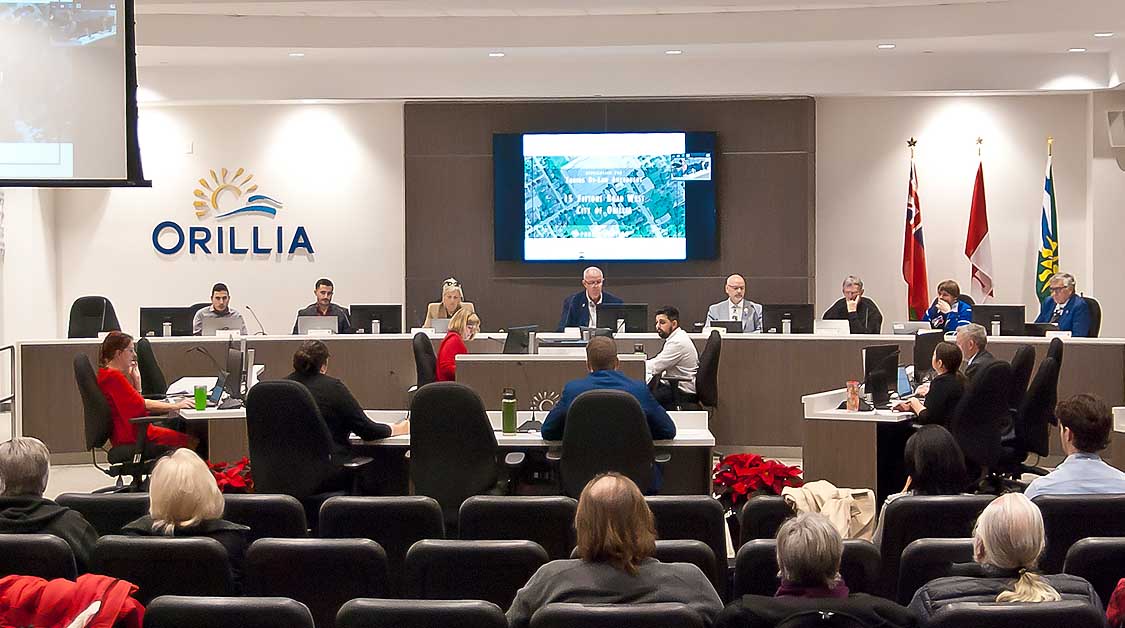
Orillia council has a special meeting regarding the 2026 budget Friday, November 28 at 3 p.m. Councillors Dave Campbell, Jeff Czetwerzuk, Janet-Lynne Durnford, Jay Fallis and Tim Lauer have a motion to override the mayor’s veto of one council amendment to the operating budget.
At the November 12 budget meeting several amendments were presented. Of those that passed, Mayor Don McIsaac has decided to veto one clause that would add $700K (or 1% of the tax levy) to the budget, which would be directed to several reserves, but mainly for the purpose of doing road work.
At the time the mayor issued his veto, he also waived veto on the other amendments, so those are safe.
At the ratification meeting on the 17th, and the previous meeting November 12, there was lengthy discussion about reasons why and why a 1% increase was needed. That discussion was about the City’s ten-year capital plan and asset management.
The History
In order to understand the discussion and arguments, some historical background is necessary. The City used to just wing it, so to speak, looking at major capital projects staff said were necessary in the next budget year, with some indication of projects are on the horizon during the next few immediate years.
That changed when the asset management philosophy took hold of the accounting community in about 2010. The City adopted a ten-year approach. Assets can be anything from vehicles, to parks, buildings, roads, pipes in the ground and basically things not expendable like wages, pencils and paper clips.
Staff figured the life spans and maintenance rates for the assets as to when it would be time to buy new, or schedule repairs or refurbishments. This then translated to how much will all that cost, and where is the money going to come from, hence the capital plan.
Essentially it was a timing exercise.
Up until last year there was a projected $250 million shortfall between identified funding sources and the many projects needing to be done.
This was not a nail biting situation because both the province and feds from time to time create infrastructure grants, with known external to the City funding programs factored into the ten-year plan. Not knowing what the other levels of government are likely five to ten years from now means putting some projects further out on the time line, and when funding is announced, moving some forward. The trick is to know what needs to be done and having some idea of what the costs will likely be.
Most capital projects on the books in 2025 and planned for 2026 have funding identified from grants and from reserves and do not cause increases to the tax levy.
However, previous councils, at Lauer’s urging, opted to add a percent to the tax levy to be put into reserves to not be caught short ten years later to pay for something that absolutely, necessarily has to be done.
Change
Since last year, the capital plan has changed. Some projects were pushed further out on the timeline (e.g. Laclie Street reconstruction, which was originally scheduled to have phase three be done this year, to starting the last leg of the project in 2029), or to being severely scaled back (e.g. reconstructing downtown streets from the proposed plan to something tens of millions of dollars less)
This reversed the $250 million funding shortfall to what the mayor has been calling a $90 million surplus. This is quite a swing, which demands the question, what things are not being done to the tune of $350 million. No councillor has asked the question.
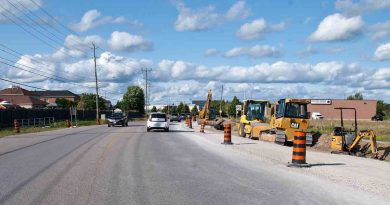
Focusing on roads and sidewalks, Lauer said, with the current level of spending on roads it will take 22 years to complete addressing the roads considered to be in poor or very poor.
“I don’t think 22 years is reasonable or should be accepted,” Lauer said.
At that rate as the last road on the current list is done, there will be other roads added, meaning the City will always be behind on roadwork.
“We’re never going to catch up at that rate,” Lauer said.
In reworking the ten-year plan, staff said increasing the tax levy by 1.98% annually will create the surplus the mayor speaks of. One might notice collecting $1.4 million extra annually (1.98%) for ten years does not result in a $90 million surplus.
Lauer wants staff to find a way to increase the roads budget annually equal to 3% of the budget. This does not necessarily mean the tax levy will go up by that amount. Remember, most of the capital spending the City does comes from grants and from reserves (money already collected either by the tax levy or contributions to reserves from any annual budget surpluses, development charges, grants received, or interest earned.
The Debate
The mayor’s contention is because there appears to be a surplus at the end of the ten year plan it’s not necessary to collect the full 1.98% council previously earmarked as an ongoing plan in the 2026 budget year and removed 1% from the budget.. This would result in a lower tax increase in 2026.
Complicating the discussion on the 17th is the County had days before presented their operating budget projection to the City for 2026, and the City’s portion would be lower than 2025. Lauer said increasing the reserve contribution one percent this year would have little effect on final budget because the lower County budget request would offset.
The mayor still didn’t think adding the reserve contribution was necessary.
“We obviously can’t spend the $700,000 next year. I don’t think it’s required because of the 90 million dollar surplus we’ll wind up with at the end of the ten years. I think your comment about the county giving us a break and let’s go spend is, ah, silly, to the sublime I suppose is probably the best way to say it. Just because we have extra money doesn’t mean we should spend it. We have taxpayers out there who should reap the benefit of that windfall and not just go and spend because we have it,” the mayor said.
Lauer countered it’s not just about the 2026 budget year, it would still be needed and future councils would be forced to make a higher budget increase to counter not contributing in 2026.
“I wasn’t aware silly was a financial term. This has got nothing to do with spending money just because we found money. The decision was made long before we heard from the County. The County has indicated there won’t be the pressure some of us thought was going to occur. I think you’re misrepresenting the situation. This is an attempt to pay our share of what is expected down the line and I urge council to stay that line,” Lauer said.
Councillor Durnford took issue with calling it spending, she said it is an investment, since the money would be going to reserves and not immediately spent.
Councillor Campbell also took issue with calling the new ten-year projection a surplus.
“I think calling that a surplus is incorrect. I think wiggle room as the CAO said is a good way of putting it, or a contingency as councillor Lauer said,” said Campbell.
“Each council for those ten years, in my view, have a responsibility to put away 1.98% to properly fund that ten-year capital (plan),” he continued.
‘If we do anything less than 1.98, in my mind, we are not taking responsibility. I’m a tax payer too. I don’t want my taxes to go up. I want them to be as low as possible. But, as a taxpayer, I also want to take responsibility for what needs to be done in this City for the next ten years.
Six votes are needed to override the veto.
Though a closed session is not listed on the agenda, a Facebook post from the city said, “a portion of this meeting may be held in closed session.” It’s not clear why a budget discussion would need to go into closed session.
Council meetings are open to the public or can be watched on the City’s Youtube channel.
(Photos by Swartz – SUNonline/Orillia)