Council Preview
By John Swartz
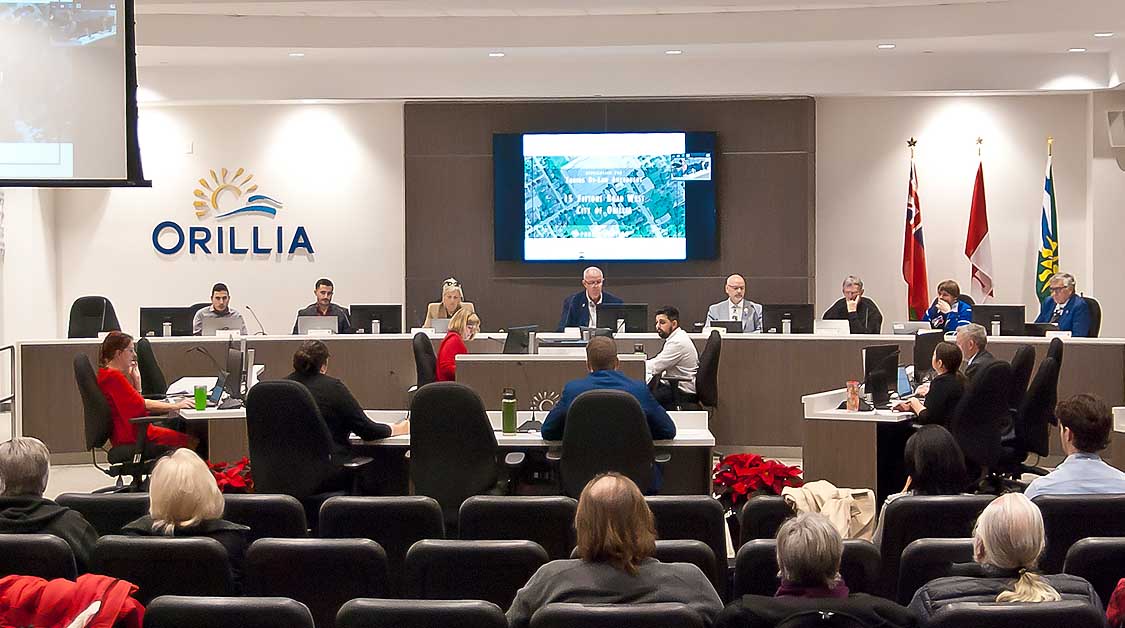
Orillia council meets an hour earlier than usual Monday, March 25 in order to have a planning meeting fit into the afternoon. The point of the 1 p.m. panning meeting is to hear a zoning amendment which will allow 1000444419 Ontario Inc./Sullnet Holdings Inc. to build four town house style buildings with 34 housing units at 116 and 120 Bond Street.

Council already approved amendments to allow construction of 18 units on 116 Bond Street last November and the developers say the same criteria should now be applied to the property at 120. One of those criteria granted to 116 was to reduce parking requirements from 1.5 spaces per unit to 1.25 and to include visitor parking as part of that allotment. This new application results in 43 space across both properties of which 9 will be visitor parking. That really means 1 spot per unit.
Also granted in the previous amendment was a reduction from 120 sq. m. per unit to 109 sq. m. The City will get a little more than $1 million of development charges, and staff say the annual property taxes charged will be 32 times what is currently collected, though the report does not attach a dollar amount to that figure.
When council moves to the regular meeting they have two deputations at the top of their agenda.
One is by Gillian Siddall, president and vice-chancellor, and Linda Rodenburg, principal of Lakehead University to provide an update on expansion of Lakehead University’s Orillia Campus.
Little detail about the deputation is provided, but the hospital locating on part of university land will be discussed.
The second deputation will be made by Diane Porteous, Maggie Buchanan and Heather Lewis of the Canadian Federation of University Women. Their original request was rejected by staff and reversed by council. They want council to declare intimate partner violence is at epidemic levels for council to request the province recognize it as an epidemic.
Among the details they will present are 117 Ontario municipalities have already done so (Orillia previously attached its name to a resolution from Bracebridge), and the number of incidents reported to police in Ontario went up 18% between 2023 and 2024 (35% if 2022 is included). Locally, North Simcoe Victim Services stats show a 64% increase from 2023 to 2025.
Then the public forum happens, and because of recent events there will likely be more than a few addressing council.
Council will then go into closed session and there is one item, from Mayor Don McIsaac regarding requests sent to the City on May regarding a new development on Barrie Road.
Moe Zadeh is the developer of the three apartment buildings on Barrie Road closest to City Hall. He is planning another building on 3 acres primarily to provide services to tenants of the other three buildings. Services include medical offices, community rooms, and a cafeteria/kitchen facility and 200 housing units.
He was asking for the City to waive development charges, planning fees and for up to 5 years property taxes. Zadeh noted property taxes on the other three buildings is $ 780K per year.
The mayor already responded saying there are various programs in place to address development charges and planning fee reductions or waivers, but there is nothing regarding property taxes. Even so, without more detail on the development stating a value what any of those reductions might be is not possible at this time.
Here We Go
Back in public the first item on the agenda is a proposal from councillors Ralph Cipolla and Whitney Smith to reinstall the Champlain monument in Couchiching Beach Park. The proposal is similar, but different from the one of a few weeks ago that council did not agree to. This time the increase budget being asked for is only for $500K more, rather than $750K of the previous proposal. Council has already approved $250K for the purpose of returning the figures, storage and reinstallation design fees.


The report concludes, “The proposed design provides a path forward that is more in line with what the community has indicated it wants for the future of the Couchiching Beach Park statuary. It would allow the statuary to be restored and returned to the park, while also including updated interpretive elements to provide additional historical context.”
Based on online comments late last week related to development, not all of the community agrees, and those that do approve have racist intentions or are clinging to the pabulum they got dressed up as history in their elementary school years which has since been shown to be, at best, inaccurate. SUNonline/Orillia previously wrote about historical investigation more recent than the 1960s and links to those documents are in this editorial. That information has been available to council, and several have said they looked at the material, but it is apparent old ideas are hard to shake.
Despite SUNonline/Orillia changing its position based on the new documentation the monument should not be reinstalled at all, at the time of the previous proposal being made SUNonline/Orillia did recognize the monument will likely be reinstalled in some form and the new proposals (both) did relegate the Champlain figure to a secondary position.
Sorry, Not Good Enough
The next item is a report from McIsaac, Cipolla, Smith and councillor Luke Leatherdale regarding the location of a new hospital.
Their argument rests on two points, One is moving the hospital from a centrally located site will be detrimental to the community as a whole on several measures, and two, Lakehead University may not have the ability to give up some of the land donated by the City for the campus according to the development agreement with the City.
SUNonline Orillia has written about this subject, the location, here, here and here.
There is much in the report to be aware of in consideration of the long term health of the community and specifically what happens to your property taxes, and much to agree with in the report.
The province has already signalled intent toward building on the edge of town, but there is reason for informed citizens to speak up about the side effects we will all pay a lot more for than the few millions they will save not using a site that may need some remediation (The former Dorr Oliver Long site is large enough according to the original plot size requirements, which were increased by the hospital after SUNonline/Orillia pointed out that was a viable site)
While development charges may cover some of the expenses the City will have, you can bet most of it will fall on the property taxes you pay – and those costs will never be enumerated in the same blurbs and statements made about how much money the province is spending to build a new hospital. It will amount to millions of dollars more. The report gives a shopping list of what some of those development costs for a new building will be.
Then there are the ephemeral costs. Many researchers and scholars have looked into what happens to communities when people places like hospitals, arenas, city halls, police stations and etc. are built on the edge of town instead of central locations – and this writer has not found any positives – other than constructions costs were marginally cheaper building on farmland.
Proximity matters too. People complain about parking downtown and despite how much is really available, being able to see what you have to walk towards makes a difference (i.e. one can walk just as far to actually go through the doors of Walmart as it takes to get to the Opera House). Now imagine what seniors using walkers might think about getting to the ER if the ER is now on the other side of town across a highway and ‘yeah, I can see it, but it’s still a mile away’.
Also, ephemerally speaking a busy looking downtown attracts even more people who might spend some money. Despite the complaints about our downtown, we do quite well compared to other communities of our size, and some larger ones. Take away all the people connected to the hospital, combine that with taking away the busses when a new terminal is built, and you will likely be able to hold cannon practice at noon downtown like they do every day in Barrie’s downtown.
The people making these proposals all make a lot of money and have cars and their assumptions and arguments favour that privileged position, but what about low income earners and those who don’t have cars? What about those who can’t afford the parking fees? Young, healthy people make decisions like where to build, but what about the senior population with all their mobility and affordability concerns? This is not just about patients; presumably those will have some visitors.
There are businesses and agencies which have purposely located near our hospital. In what world does one think they will not relocate to stay close to the hospital creating even more problems like new infrastructure and what to do with all the empty space they left behind? One only has to look at what has happened surrounding Royal Victoria Hospital in Barrie to know the answer there will be a migration.
Another argument put forward in the report is why build such a sprawling facility? What happened to build up, not out? Building up increases the number of sites which may be suitable for a new hospital, but that appears not to have been a consideration.
In short, building a new hospital anywhere in the West Ridge has consequences that are not being addressed anywhere by anyone except for on your computer screen by SUNonline/Orillia, and the report in this meeting’s agenda.
The motion for this report asks council to endorse a downtown location and forward the resolution to the hospital board. Alternatively council has the option to ask the hospital board to provide studies addressing the things illustrate here, studies which have not been done, particularly a comparison addressing the benefits and detriments to locating either in West Ridge or downtown.
Speaking Of Affordability
The next report from the poverty reduction working group is a follow up from their previous report made at the last council meeting. This one is to formally create a new working group to work on long-term solutions. This would also mean a staff support component.
The City’s clerk, Dan Kirby, provided a note to council that states, “At present, Council Services does not have sufficient staffing capacity to meet these requirements prior to the next budget cycle.”
The report authors state support from development services and engineering, corporate services, and environment and infrastructure will be needed when matters related to those departments is being considered, but not on a full-time basis.
What is changing, because the working group already exists, but not as a permanent part of the council committee structure, is to making things permanent, and create guidelines, or rules of engagement. What is happening is a shift from investigating what the current landscape looks like, to investigating more thoroughly how to change that landscape.
Doctor, Doctor
Next is a report from the City-operated medical clinic working group. The objective is to report on activity and get the third installment, $200K, for the Lake Country physician recruitment committee.
To date, the committee says 2 doctors have opened practices in Orillia, one more is starting in the fall, another has committed to establishing a practice here when residency is completed, and another is relocating in 2027. They are currently is discussion with two more doctors to practice here in 2027.
One of those doctors is coming from the U.S. and another from Alberta.
Council authorized $500K and has already released $300K of the total.
Good News for Shock Absorbers
Staff have a report asking council to increase the level of service for road repair should be all roads are maintained above a very poor standard, and that the annual budget be increased to $4.5 million for 2027 to 2030 to get to that standard. It also asks council to increase the sidewalk budget to $1.5 million.
One might think that would include new surfaces on a lot of roads, but you would be wrong, just as wrong as you would be considering what constitutes a ‘good’ road.
Staff say in 2027 there are 67,050 lane-meters of road considered very poor (equivalent to 33 miles of two lane roads). If the standard was increased to the next grade, poor, there are 153,050 lane-meters of road to do.
Staff say if the standard level of service remains at $1 million (which council has put additional money toward last year and this) it would take 20 years to do all the very poor rated rods. Of course in 20 years more roads would deteriorate, so the cycle continues.
Snow Way
Staff have a report that responds to 5 separate report requests regarding snow plowing. The report asks council to increase the service level and add $1.45 million to the snow budget in 2027 for equipment to clear roads and $1.25 million increase to the annual operating budget.
The 2025 budget was $1.946 million and 2026 is $1.964 (this includes next winter). Council added $647K over the last two years. The weather gods said, ‘hold my beer.’
The increased budget would increase full-time staff from 19 to 23, and seasonal staff from 12 to 20.
Of the various level criteria, an interesting one is regarding the downtown. Currently snow banks get maintained to less than 60cm as resources are available. A new level of service would be 60 cm. within three days of a snowfall. That’s approximately 2 feet. We do very poorly compared to other communities like Gravenhurst or Lindsay where they clear out all the snow in their downtown areas the next day.
Show Us The Money
The year end 2024 audit is next. Of note, the City has almost $200 million in cash and investments. That does not count the $35 million from the sale of Orillia Power Distribution. This is a total, some accounts, like the development charge reserve may show a deficit, but others have very positive balances.
On the liability side, the City has $95 million which includes borrowing $18 million for Laclie Street reconstruction, the Brian Orser Arena reno and money to change street lighting to LEDs.
One could logically ask, why borrow if there is so much in the bank. The short answer is the difference between paying interest on money for specific projects, and earning interest on investments. Sometimes borrowing makes sense, rather than reducing the amount of investments and therefore interest income.
Take It Away
If you are a business registered to get recycling pick up and your collection day is Wednesday, it will change to Thursday on July 1. Businesses with a different collection day do not have a change.
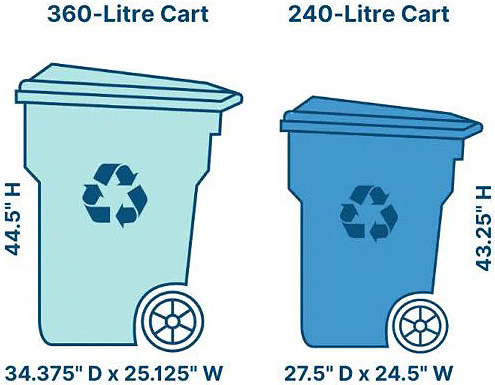
Collection will also change to carts rather than blue boxes and all recyclables go in the cart, no separating things into different carts. Cardboard is still separate and businesses can put out 4 bundles (of what size is not stated in the report).
Though the report is about business pickups, there is a paragraph about residential recycling pick up switching to every other week, instead of every week, starting July 1. Happy Canada Day.
Motions
There are three enquiry motions. Councillor Jay Fallis has one for staff to report on a review of affordable housing funding accounting, what tools are available to make sure projects proceed according to plan, and do affordability eligibility requirements match municipal expectations.
Councillor Smith has a motion for staff to report on the feasibility of prohibiting fishing on City property in the Glen Crescent and Dale Drive area. Councillor Lauer’s motion is for staff to report on the ownership of back lanes behind retail outlets on the north side of Mississaga Street between Matchedash and Peter Streets.
Council meetings are open to the public or can be watched on the City’s Youtube channel.
(Photos by Swartz – SUNonline/Orillia)