Council Preview – 2026 Service Partners Budget
By John Swartz
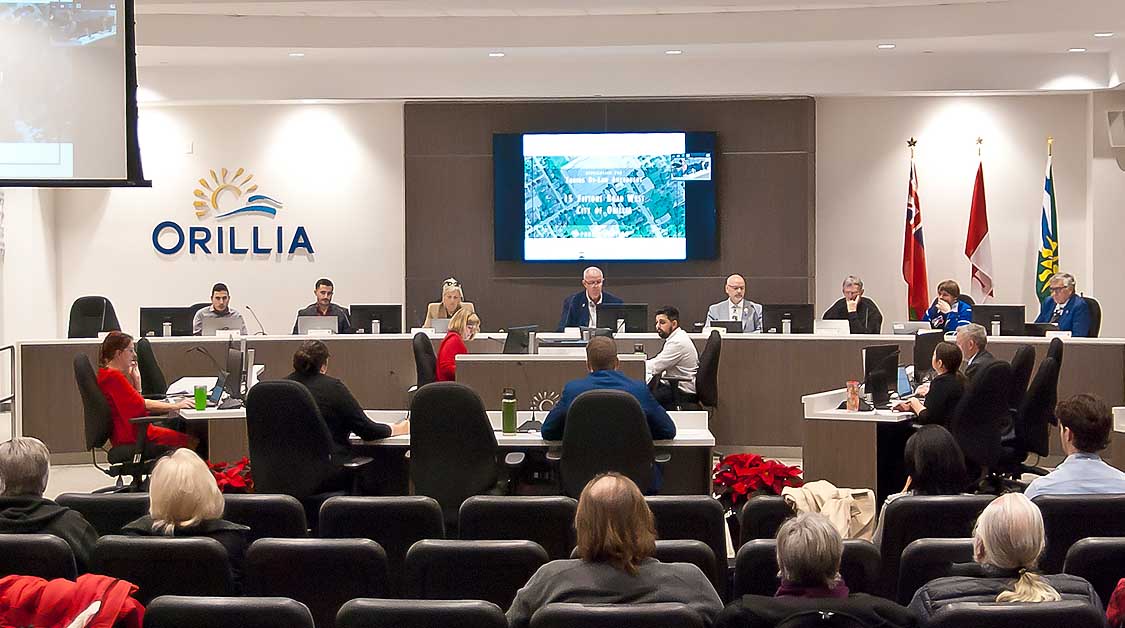
Orillia council meets Wednesday, December 10 at 4 p.m. to deal with the last piece of the 2026 budget. With the new powers given to Mayor Don McIsaac the budget deliberation procedure changed and the budget was split into three parts; capital, operating and service partners.
A quirk of the budget process is the service partners budget is actually part of the operating budget and even though the operating budget was passed weeks ago, it will not be complete until council deals with the service partners budget submissions. The service partners are the OPP, Simcoe County, and the Simcoe Muskoka District Health Unit.
Representatives from each organization made their pitches to council November 17, but the OPP had not completed crunching their numbers. A second service partners meeting occurred December 8, but was over and done with quickly because the OPP only forwarded their numbers on December 5 and staff did not have enough time to analyze and prepare a report, necessitating this meeting.
As it stands the County budget submission is $1.8 million lower than 2025’s. The City pays the county for services like paramedics, housing, long term care and social services.
The county decrease in funding results for a change in how it bills for capital projects, from cost plus interest billed over a ten year period, to a depreciation value bulling over the useful life of the capital asset (6 years for vehicles, 40 years for buildings
The SMDHU budget request was only $21K higher than last year. The SMDHU does not finalize their budget until early in the New Year, so staff estimated the likely outcome, which in this case is an increase.

The OPP budget is going up by $1.1 million. It was actually $12.5 million, but the province capped OPP billing increases to municipalities at 11%. Without the cap the cost of policing would have gone up 25.6%. Wages are the primary factor for the increase.
All together the amount the City will pay to service partners is $19.8 million, or 25.6% of the total budget.
The operating budget, minus service partners, after council amendments were considered (the mayor vetoed an amendment by councillor Tim Lauer to increase reserve contributions by $700K and council did not have enough votes – six needed – to override the veto) tax levy increase stood at 1.93%.
With the County’s substantial budget decrease, the net effect of adding in all the service partner’s requests brings the levy increase down to 1.48%. When combined with the education tax, which will remained unchanged from last year and the fact it makes up almost 10% of your tax bills, the net effective property tax increase for 2026 will be a 1.31% increase.
There is another item on the agenda. Technically there is a long period of amending, accepting/vetoing amendments, and overrides which could push finalization of the budget into mid-January. However, because there is no indication council will be coming up with any amendments, staff have a motion for council to shorten the rest of the procedure to December 10. This means the budget, in its entirety, will be set on the 10th.
However, there is the matter of the SMDHU not having firm numbers for the City until the New Year. To get around this, the motion has two clauses, an exception built in for amendments to the health unit budget only, and a second clause to just approve the service partner’s budget as it is with the estimate for the SMDHU.
Looking at the report one would think part one and two cancel each other, and it would if council voted yes on the entire motion, but this gives council to option to vote on each part separately (likely yes for one clause and no on the other).
Given the health unit’s submission, even if it is higher than the estimate, it will not be any great amount. An educated guess is council will just vote to accept the budget, health unit estimates included, and not to make the exception for the health unit. If the health unit budget arrives with a higher than the estimated amount, council will likely just make up the difference from a reserve, maybe the tax rate stabilization reserve.
This shortening of the budget process is what happened with the capital and operating budgets. When the mayor did not veto changes to capital, and the veto override for operating failed, there was no need to prolong things for weeks to stick to a schedule which no longer applied and that would be the case with the service partners.
Council meetings are open to the public or can be watched on the City’s Youtube channel.
(Photos by Swartz – SUNonline/Orillia)